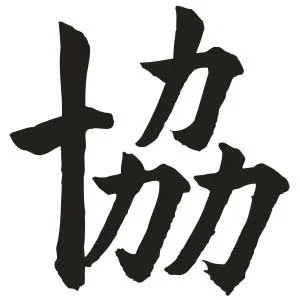
Unity - Hsieh
The fact that a huge and varied country like China has existed as a powerful civilization for over two thousand years is due in part to the importance placed on the concept of unity, or hsieh - a concept of social organization mirroring the unified order of the universe.
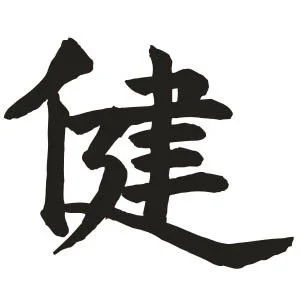
Vigor - Chien
Chien is a complex character. It is made up of the ideas ‘to establish’, and ‘person’, perhaps referring to the strength, vitality, and passion of those who are able to establish themselves in the world.
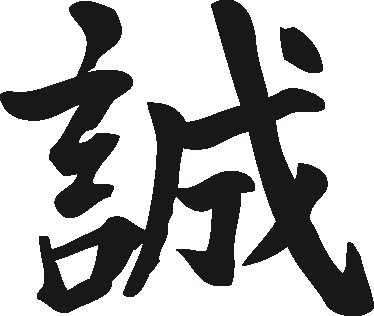
Sincerity - Ch’eng
‘Words’ emanating from the ‘mouth’, with ‘perfection’, produce the character for ‘sincerity’, an attribute considered foremost on the path to enlightenment. Ch’eng is the perfection of self, but more important, as the perfection of others through its practice in human relationships. Sincerity: perfection through the transformation of thought into words.
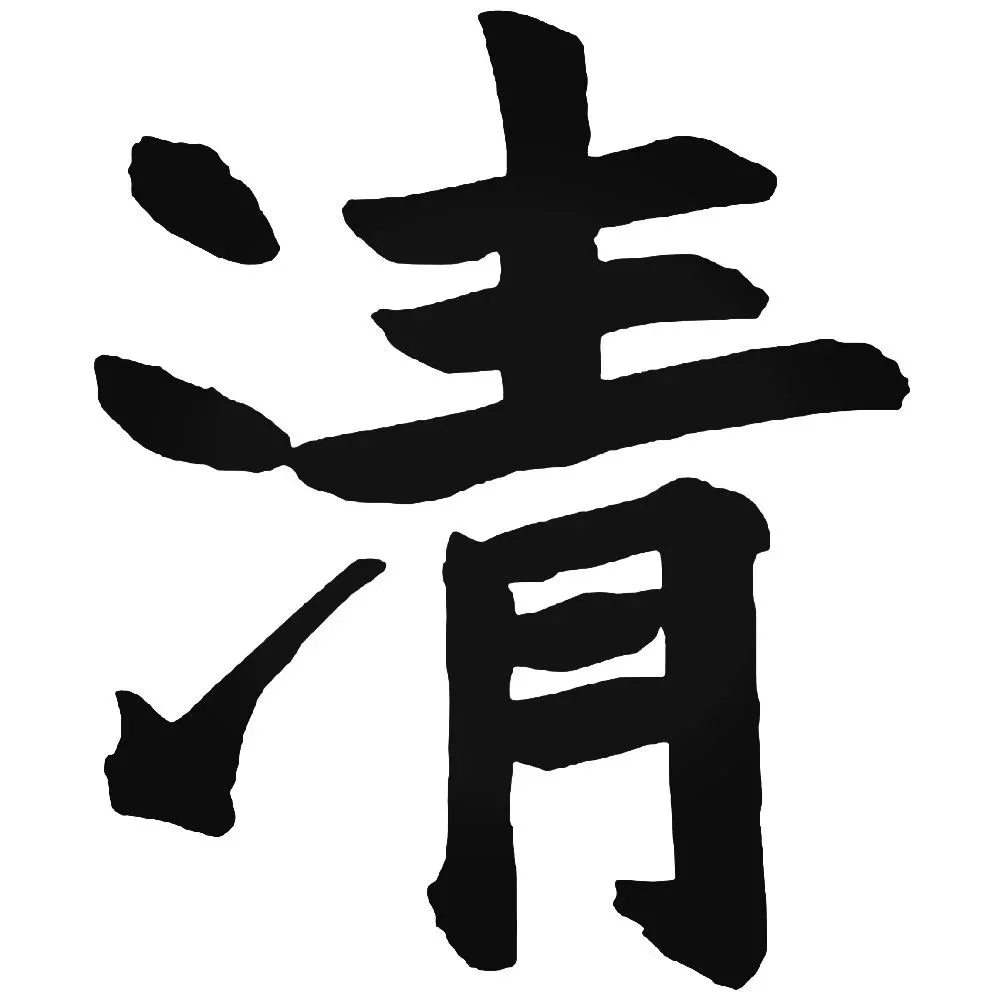
Clarity - Ch’ing
Ch’ing means ‘clear’, ‘lucid’, and ‘pure’. The character is a simple ideogram composed of two elements: ‘water’, represented by the three ‘drops’ of the water radical and ‘the colour of nature’. When water has clarity you see in it the colour that nature gave it, just as the essential humaneness that nature gave us shines through when our energy is pure, like a pearl through clear water. This was the title chosen by China’s last imperial dynasty in 1644, which called itself the Ch’ing Dynasty.
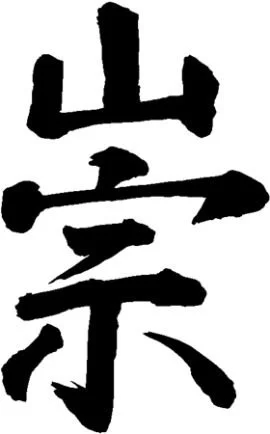
Reverence - Ch’ung
Worshiped and revered in Chinese culture since the dawn of civilization, ancestors are traditionally buried on the mountainsides as a sign of respect. Therefore, the character for ‘reverence’ places the ‘ancestor’ below the three peaks of a ‘mountain’, reminding us to revere those who came before.
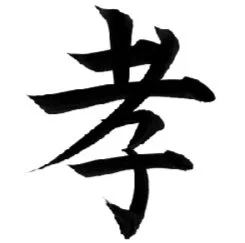
Piety - Hsiao
The character for ‘piety’ describes the correct relationship between parent and child. The child defers to, supports, and is dedicated to the parent. The principle of bound by duty was strongly promoted by Confucius, which remained central to Chinese culture for at least two thousand years.
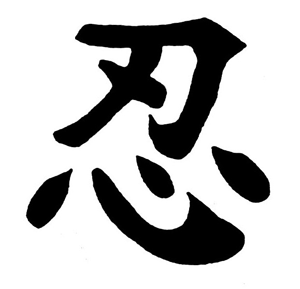
Patience - Jen
The truly patient heart is a firm one. In the character for jen, the ‘knife blade’ bears down on the ‘heart’, yet the heart perseveres and endures. Jen can also be translated as ‘tolerance; the Chinese language makes no distinction between this attribute and ‘patience’, for the firm heart is also a tolerant one.
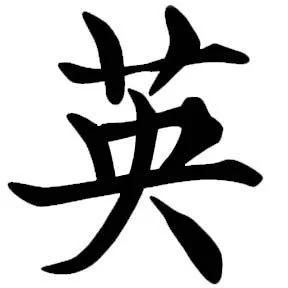
Courage - Ying
A ‘person’ with arms spread wide to signify ‘adult’, standing alone in a ‘wide open space’ - a wilderness - signifies ‘courage’, for he does not fear this place where wild animals roam. In Chinese thought, the hero courageously endures nature’s hardships by harmonizing with his environment.
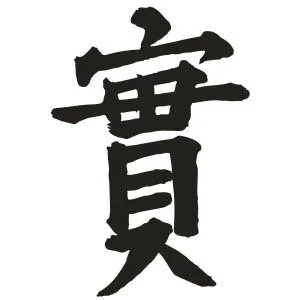
Honesty - Shih
The character for ‘honesty’, shih, goes back to the early days of Chinese civilization, providing insight into a culture that focused itself entirely on the moral nature of the ‘superior man’ or aristocrat. Here a string of coins is placed under a ‘roof’. The person who has a fortune must be an aristocrat, by definition a ‘superior’ and honest person.
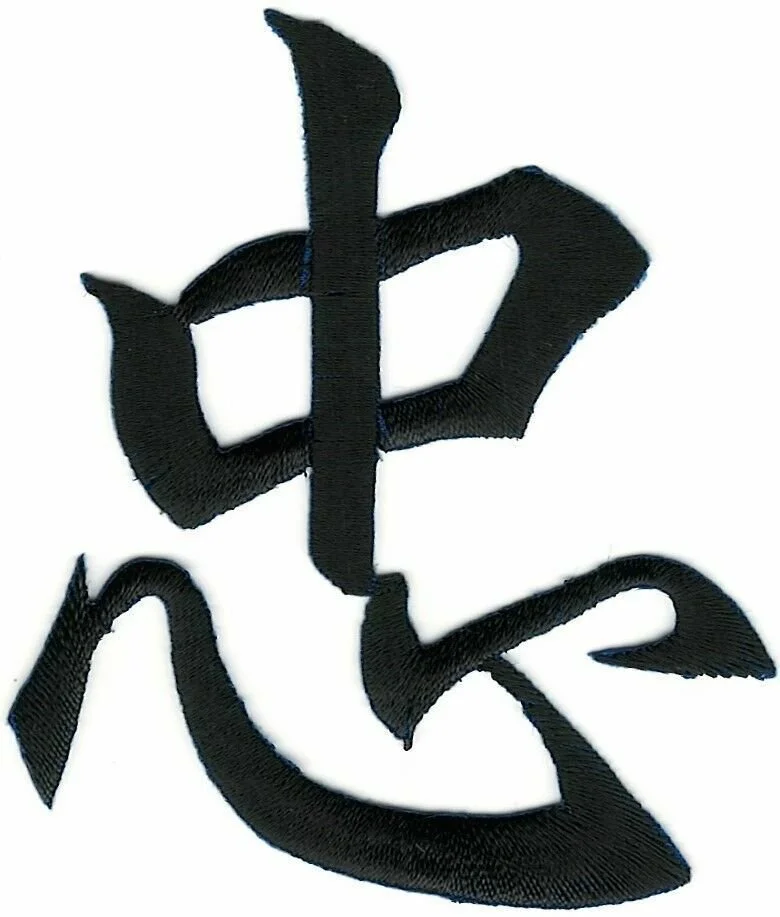
Loyalty - Chung
The character for chung, meaning both ‘loyalty’ and ‘patriotism’, shows a ‘heart’ beneath an arrow piercing a target through its ‘centre’. This shows that loyalty means having a centred heart. A heart that is in the centre is a heart in the right place. However, a steadfast heart does not imply blind loyalty. Confucius taught “What is loyalty, if it does not instruct its subject?”
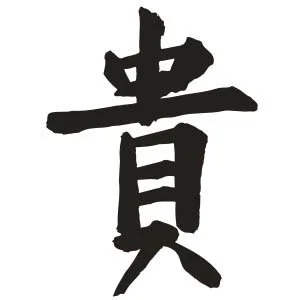
Honour - Kuei
In ancient times, only the wealthy aristocracy was considered worthy of honour. For this reason, kuei also signifies ‘expensive’. As Chinese philosophy developed, so did the concept of ‘honour’. Confucius taught his aristocratic students to set an example to the masses by honouring all those with whom they come into contact, regardless of their wealth. In Taoism, honour became an inner quality “more precious than the finest jade,” yet concealed beneath humble garments.

Benevolence - Jen
The first of the four virtues considered by Confucius to be innate in humans, can also be translated as ‘kindness’ or ‘humanity’.

Righteousness - I
Confucianism insists on ‘righteousness’, one of the four inborn virtues which, when cultivated, can purify our spiritual energy. The great Confucianist philosopher Mencius defined I as doing what we should as “citizens of the universe,” while Confucius stressed doing what we should purely for its own sake, without desire for material or spiritual gain.
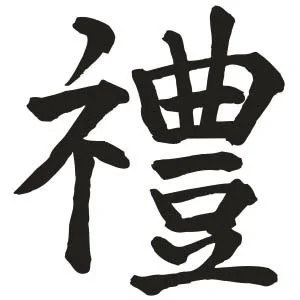
Propriety - Li
Originally li meant simply ‘sacrifice’, denoting observance of ceremonial ritual in order to interpret the will of heaven. Confucius enlarged the meaning of li to include correctness in dealings with others - for if his students were to become rulers, and treat people with respect, order would come to society.
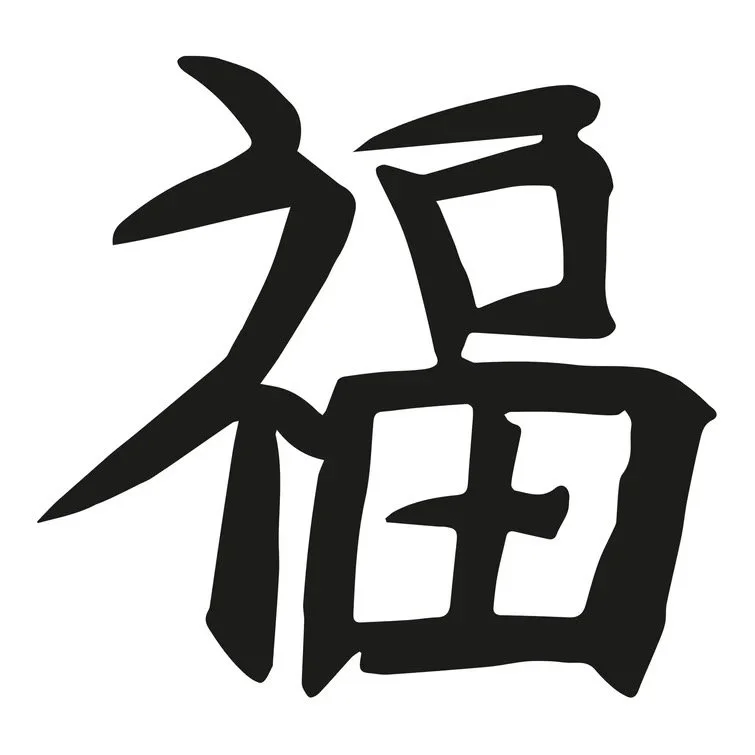
Wisdom - Chih
The character for ‘wisdom’ is a complex one with a simple message. Above is the word ‘knowledge’ formed by a combination of ‘oath’ on the left and the small, squared- off pictogram for ‘mouth’ or ‘spoken’ on the right; what we swear to in words, we know to be true. Below ‘knowledge’ is the character for ‘sun’. Wisdom: the knowledge that spreads and enlightens like the sun’s rays, benefitting the world at large.
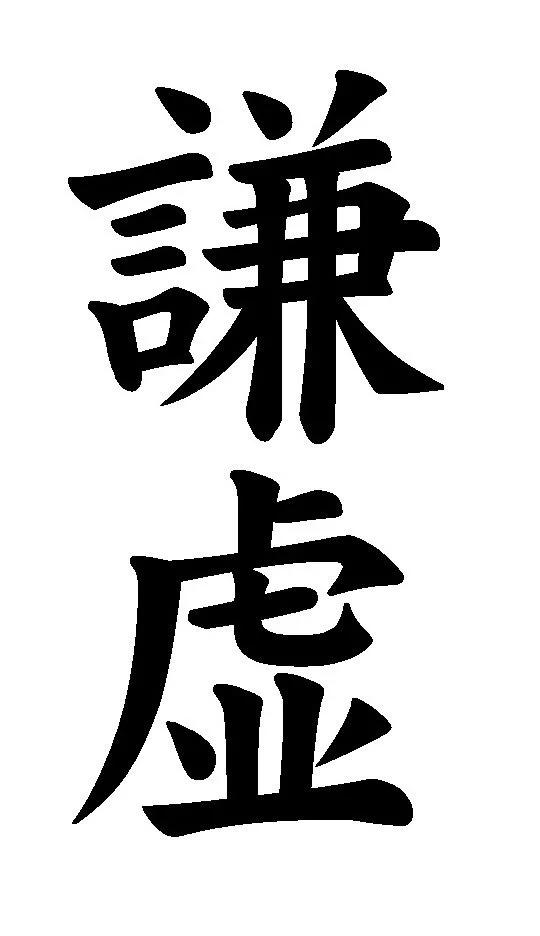
Humility - Chian Hsun
All the virtues of a Black Belt cannot exist without the virtue of Humility. Humility allows one to lead by example as opposed to might. Humility instills trust and calm in others and enhances all other virtues.