
SRKF Emergency Response Plan
This is a living document, so please review it on a consistent basis. Reach out if you have any questions.
SRKF Instructor’s Review
All instructors please complete this form by Friday, August 8th; please be as open an honest as possible so we can best formulate a way to ensure everyone is feeling fulfilled and supported while building stronger classes for our students.
Our Approach While Teaching
Sifu Brinker has a saying, one I find myself referring back to time and again. You can’t force something down a students’ throat. You need to get them to open their mouths first.
What is a sure fire way to cause a student to stop being receptive, to close their mouths? It’s the same for everyone. You and me as well. Put them on the defence. Raise their hackles. Lose their respect. This is the biggest thing we need to avoid doing.
If a student feels they are being judged, you have lost the ability to teach them. Period. As instructors, we need to be diligently mindful of our attitude and demeanour. Having a condescending attitude? Absolute worst way to approach teaching. As instructors you rely on your students to learn, but if they are not, if they are not applying the lessons you have been giving them, THAT IS ON YOU AS THE INSTRUCTOR. Do they have a crap attitude? Yep, on you. Not a phase, not a result their age, not due to the weather or season.
Why do they have a poor attitude? Because they do not have a reason to change it. Why are they not picking up or applying the lesson? Because it has not reached them yet. It could be a matter of learning style, immaturity or maybe they had a bad day. As instructors, you need to have your finger on the pulse of your students and class, to identify the underlying issues and then change your approach accordingly. Not every student learns the same way. Not every student is motivated by the same things. You cannot approach your classes with a one size fits all attitude, because all you will do is alienate and eliminate those students who do not fit into the structure you have decided on.
What does this look like? Taking accountability for your students shortcomings. They have come to us to learn. If they are not learning it is because of our failure to teach them in a way that they can learn from. If they have a bad attitude we need to inspire them, not write them off. We will most likely hit walls in our attempts, but if we are not trying to change the situation or even take an interest in trying to change it, that student is as good as gone. And our school cannot survive without students.
Check your own attitude before pointing a finger at your students. You cannot expect them to know a thing until it has been taught effectively. You cannot expect them to have the ability until you give them a chance to practice and apply it. Talk less, lecture less. Inspire more, teach more. Be invested in your students and their success. Take responsibility for their failures. This is the only way you will have the ability to do anything about it. It’s not about pointing fingers at anyone. It’s about taking accountability, which will give you control and the ability to influence the outcome.

Lockup Procedures

Key holders, please remember that having a key is a privilege, and comes with responsibilities. Instructors, this is part of your responsibility. The Kwoon is meant to be as your home, which means everyone in it is responsible for its condition and cleanliness, especially individuals with keys. Please treat is as you would your own home; if you see a dust bunny, pick it up. If you see damage, mention it to someone who can address it. If the plants are wilting, please water them.
It is critical that this list is taken care of every time we have someone in the Kwoon. Please ensure that everything is completed every night before leaving the Kwoon. If you are the main instructor for the last class of the night, you are the one responsible for ensuring things are taken care of. This does not mean you must be the last person on the mats, however you do need to ensure a key holder is in charge and aware they are responsible before you leave.
Bathrooms
Check for lost items. Place all items in the lost and found.
Ensure washrooms are clean, sinks are not running, toilets are flushed and not running.
Sweep/vacuum lower shelves and corners if dusty (handheld vacuum is available in the office).
Mop Closet
Tap is off.
Hose is placed inside the mop bucket, not left to drip on the floor.
Both the red and main mop buckets are empty, mops are properly stored.
Training Area
Double check that no equipment/possessions are left on the mats or along the pony walls.
TV is OFF.
Office/Entry
Ensure desk is tidy (please do not leave notes, etc)
iPad is under the desktop, wiring is not tangled.
Office lights are off, office door is closed.
All lights are off except the TOP LEFT switch.
Doors
Ensure ALL DOORS are locked; women’s change room door, south door near equipment storage, northeast door, north kids exit door, main door.
A note when locking/unlocking the door- if you have trouble locking the door with a key, go back in and ensure the deadbolt is fully disengaged. When someone only turns it to just after unlocking it tends to cause it to stick when locking with a key.
Between us all, lets keep this place clean, welcoming and safe.

Opportunities, Potential and Mistakes
Let’s be clear- opportunities are not given, they are taken. Someone can create an opportunity for you, but if you do not help yourself and DO something with it, then it’s just a missed opportunity. No matter how badly I may want it for you, I cannot make you take it.
When it comes to teaching, as an instructor on deck I have a world of opportunity, but that does not mean that I will necessarily take advantage of it. If I decide not to engage with a student on a personal level, then I have lost the opportunity to get to know that individual, to gain their trust and therefore have the ability to influence, and the opportunity to grow in my own skills as an instructor. This is just one example.
Some of you are okay with that. I’m okay with that if that is what you want, but know that you are throwing away opportunity and your own potential. In other words, you will not advance to the master level.
If you want more from the classes you attend, then you have to do more with them. Engage on a deeper level. Let me be clear; this has nothing to do with whoever is in charge, this has to do with how attentive you are as both student and teacher, often at the same time. I can be in charge of the black belt class, the “top dog” so to speak, but if I cannot keep my ego in check, if I am more concerned with how others perceive me, then I will miss the chance to learn something when Sihing Csillag asks a question on zoom, or Sihing Burke asks about what something feels like. These are MY opportunities, as much as theirs. They seek my knowledge, I gain wisdom in exploring the answer with them. And don’t get me wrong, I am exploring the answer at the same time as you are hearing it.
And I grow, because I am okay knowing I don’t know it all, that I make mistakes. Mistakes are opportunities too, if you choose to let them be.
The opportunities are endless, the potential is beyond what you can perceive. IF your approach is open, if you are honest in your ability, strengths, weaknesses. If you are able to acknowledge what is the truth about you. If you are able to let go of your ego, your need to be seen in a certain light.
Don’t ask for opportunities. Create them. Take them.
Make mistakes. Make lots of mistakes. Learn from them. If you’re afraid of making a mistake then, ironically enough, that in itself is a mistake.
The only wrong mistake is the one you refuse to learn from.
A 3 Step Approach
Teaching children can be tricky and is much different than teaching adults. Adults will more often have a longer attention span and can handle a bit more theory within the lesson. Adults have typically made the choice to be there and to learn, where as kids, on the other hand, are really only interested in having fun. So we either need to find a way to make the content fun or we hide the content inside the fun.
I have found some fairly consistent success with a certain approach that I’ve been utilizing for a while and I thought it might be worth sharing. This is definitely not the only approach, but hopefully it’s one you might be able to add to your repertoire. As I go through these steps, I will also share the example of a recent lesson where we worked on the roundhouse kick.
Part 1 - The Knowledge. Fun.
Part 2 - The Focus. Funner.
Part 3 - The Application. Funnest.
The Knowledge
This portion should come first and needs to be kept short. It can be used as a refresher for the older students, and/or as a brief introduction for the newer ones. You really only have their attention for maybe about 3-4 minutes here, max. Although this would be considered the “theory” portion of the lesson, it cannot just be talking, and needs to be balanced with doing. In fact, the doing should lead the lesson, not the talking. They also still need an opportunity within here to move and have some fun as well.
Roundhouse Example. We stayed set up as a full class with an instructor at the front. The Instructor immediately had them go into a bow stance (they did NOT start with talking) and had them do a few roundhouse reps. Then, while still in a bow stance, they started to refresh the class on the components of the roundhouse and took them through a few more reps in a “step-by-step” format, challenging their balance and having some laughs with it. They finished with the last few at full speed once again. This portion was kept short but active.
The Focus
This portion is a specific aspect that you want to work on and would also likely be the bulk of the lesson. So within the overall lesson, what will your main objective be for this particular class? Ideally, this is an activity where the student isn’t repeatedly TOLD what they should be working on, but rather is a fun game or challenge by which they will have no option BUT to work on said skill.
Roundhouse Example. We partnered the students up and had them find a dot along the ponywall. The first partner held the wall for stability while doing a roundhouse kick, up to and including the 3-point. While holding that 3-point, their partner then placed a bean bag on their ankle, from which point they were challenged to complete the kick (slowly) as many times as they could without dropping the bean bag. As far as the students were concerned, this was a “don’t drop the bean bag game”, which for them was a fun challenge. But in actual fact, they were working on their proper 3-point, their body alignment and hip strength.


The Application
This portion comes last and should be the most fun. We want to end the overall lesson on a really high note. This is also the students opportunity to apply what they were just working on and for the instructors to see how much of it potentially sunk in. I think of this section as “organized chaos” and should be fast paced with smiles and pink cheeks by the end. At this point in the lesson, I would be looking less to correct any of the students, and more just taking mental notes of what needs work the next time.
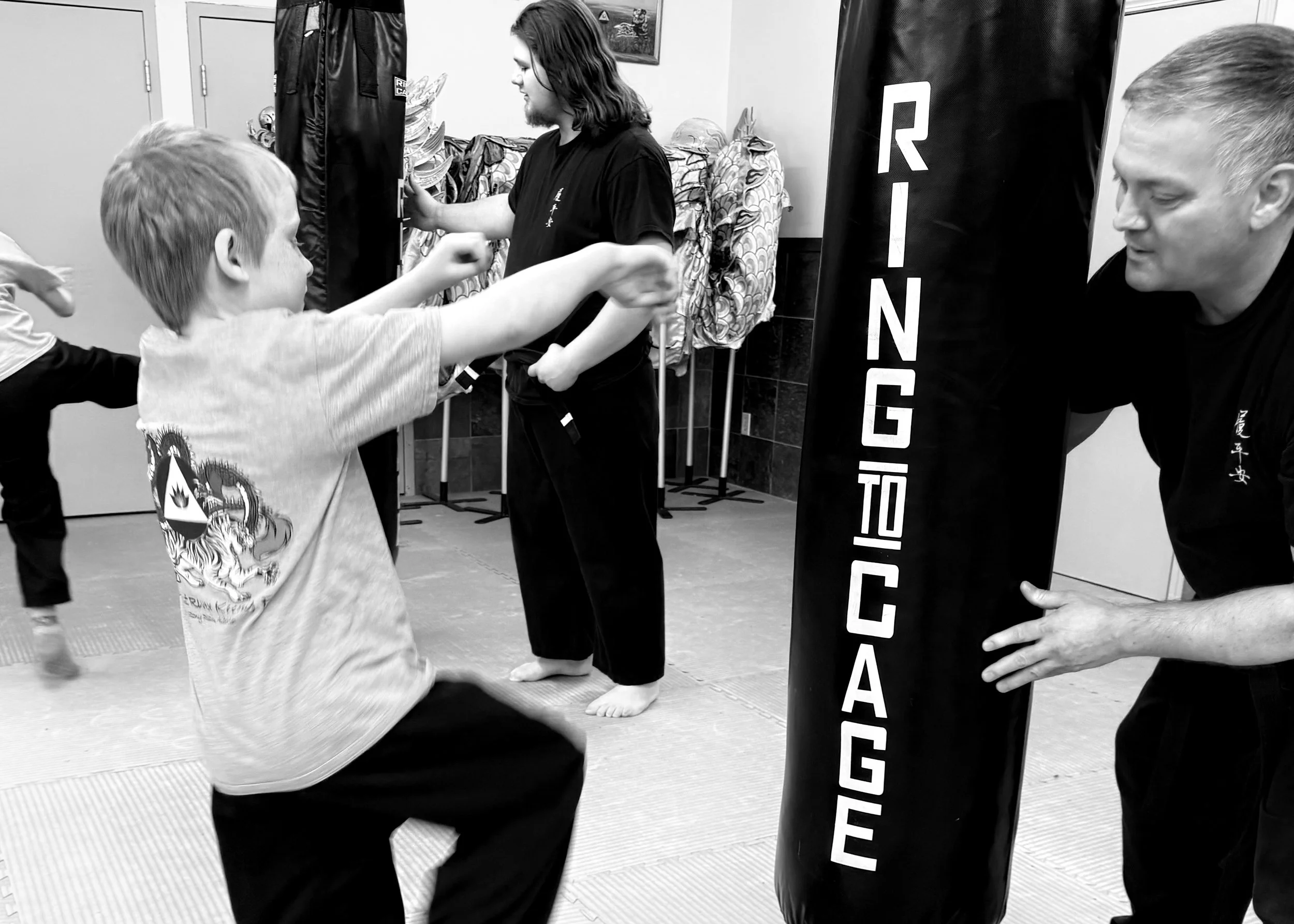
Roundhouse Example. We separated the students into groups lined up towards the heavy bags. They were challenged to run to the bag and then had to do 1 or more roundhouses at the direction of the instructor at that bag. The first round may have been a low roundhouse. The second, high then low. Third, high, low, high. And so on. The final round they got to do their best flying roundhouse.

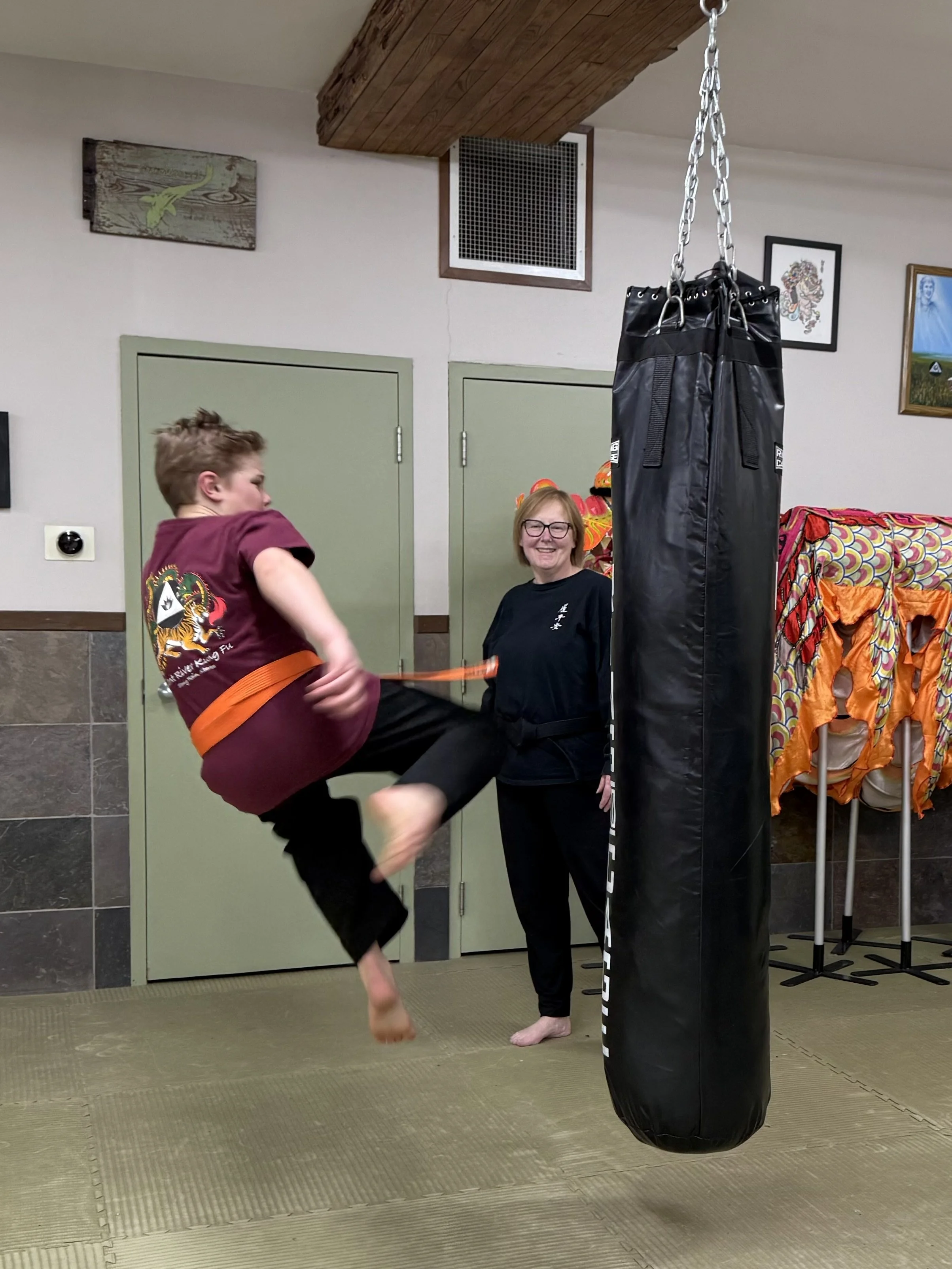
By the end of this particular class, I was really impressed by how their technique was looking in the Application portion. Everyone was pivoting and getting that proper body alignment that they had gotten used to along the wall, and many were implementing really good 3-points as well, especially when challenged with those different height kicks. And they were having a blast at the same time.
What truly made me realize that this approach had some benefits, was when Sihing N Csillag planned their next class on the side heel in the same format. It was essentially the same general setup, with different content, and the students didn’t even notice. At the same time, they were able to reiterate some of the similar skills between the roundhouse and the side heel (ie. the pivot and body positioning) and by the end of the second class we were seeing some really amazing progress. Sidenote: This is now making me take a good look at what lessons might work really well back to back.
When we discover a successful drill, our instinct tells us we need to replicate it exactly so that we get the same result. But what tends to happen is we will use it over and over to the point that it becomes old and boring, no longer having the same effect. Instead of copying the drill itself, I’m trying to figure out what made that drill successful and then replicate the approach. I think if we can figure out how to do that, the potential for successful drills, and successful classes, become endless.
Malinda Ferris

Curricular Focus and Syllabus Progression
As promised. The direction set by this document is to be the standard moving forward, throughout both the Young Dragon and Teen/Adult classes. Please read through this carefully, refer back to it often, and follow the spirit of each section as outlined. Although little has changed to the syllabus portion, I am hoping the Curriculum described brings clarity to the lessons we are striving to teach, and our methods begin to support the overall goals of the school. The width of a students knowledge is NOT the goal. The depth of their understanding into each technique, and the skill to utilize it are our priorities.
Reach out to me if you have any questions (Sifu Rybak). My number is (780)446-9625. If you do not have absolute clarity on the directions set we need to talk.
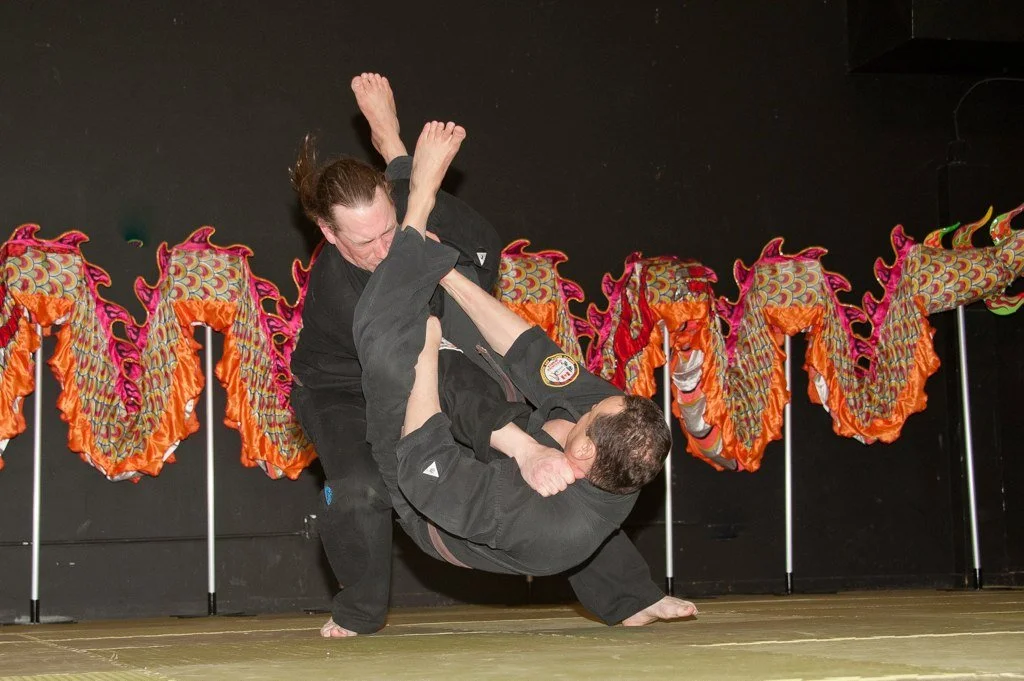
Wuxin- Black Stripe
(As explained by Sifu Jeff Brinker, November 7, 2024)
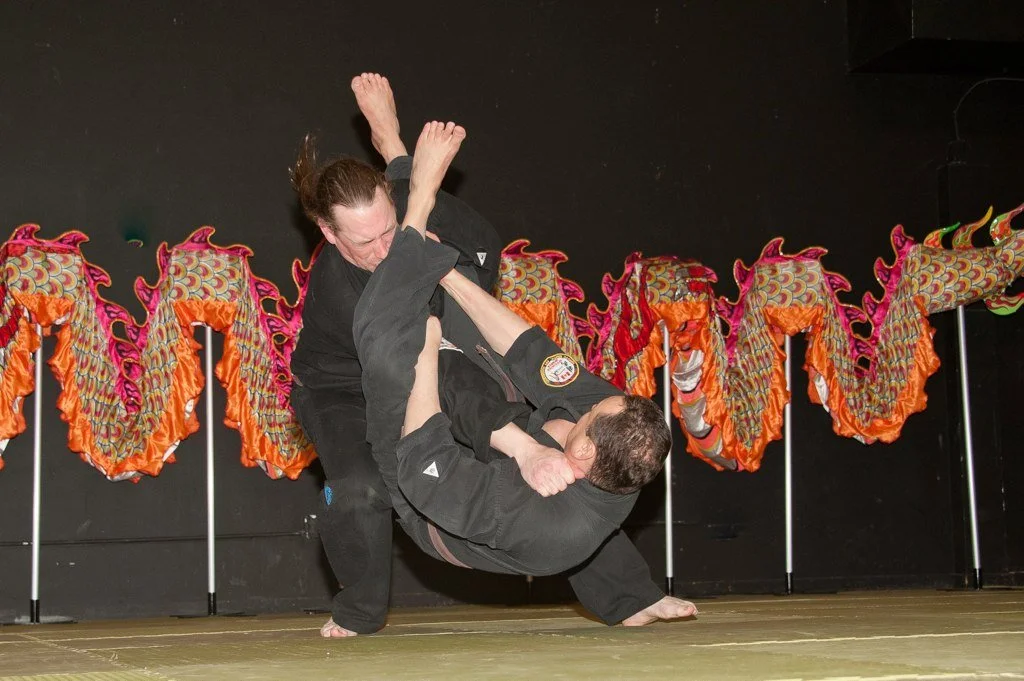
The difference between syllabus and curriculum has been defined for years. Unfortunately, we sometimes still struggle with the differences and keeping them in perspective while we are actively teaching on deck.
Syllabus- the tools we use to teach
Curriculum- what we are actually trying to teach
Intellectually, we understand. Practically, we are struggling.
Using the syllabus as a checklist is an incorrect approach. We do not teach the syllabus; if the students know the tools, that does not yet mean they know the curriculum, the heart of our lessons. It is likened to knowing how to use a hammer; many of us know how to use a hammer, but that does not mean we know how to build a house. Our goal is to build a house, the curriculum, not teach about a hammer, the syllabus.
As it has been instructed by Sifu Brinker, the Black stripe will not be given to a student until all other stripes have been earned.
This is not without its reasoning. The Black stripe, Wuxin, translates to “No Mind”. It is the idea of “Knowledge Applicability”. The ability to properly execute a technique cannot be present if a student has not yet earned, sufficiently to their rank, the Yellow, Red or White stripes. How can they be properly applying their knowledge if they have yet to earn/adequately learn their Vocabulary of Motion, Keystone Principles, Six Harmonies?
Wuxin means No Mind
“What we mean by that is, these techniques are yours. You don’t have to think about them, you don’t have to intellectualize them. You just need to execute them and you know how to execute them.”
How can you execute a technique if you are not able to move in a way that allows you to earn Yellow, Vocabulary of Motion, or Red, Keystone Principles, or White, the Six Harmonies?
In order to have Wuxin, you must perform your Vocabulary of Motion, Keystone Principles and Six Harmonies to your rank.
At a minimum.
Because Wuxin is last, it can serve as a “catch all”; stripes that had been earned earlier need to be kept up to expectations in order to earn the Black stripe. Therefore it is again impossible to earn Black before the others.
“Black stripe means you know how to apply your knowledge. If you know how to apply your knowledge then you have the knowledge.”
Therefore, all other stripes must be earned first.
Instructor Investment and Engagement
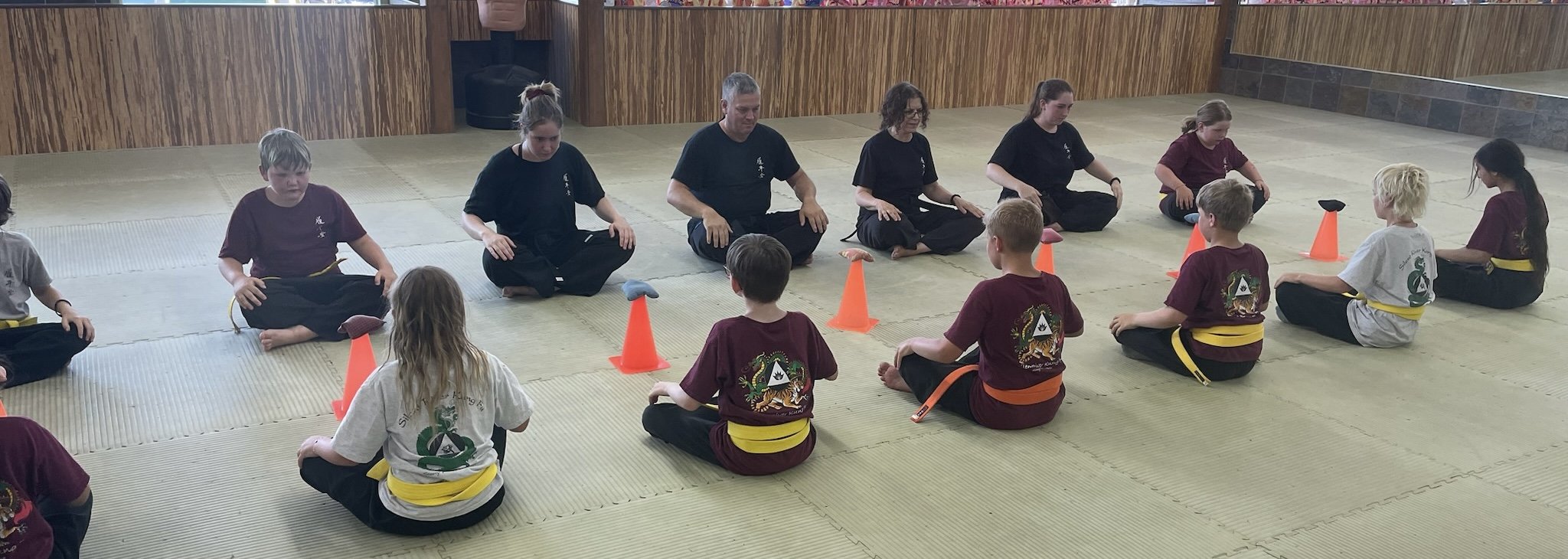
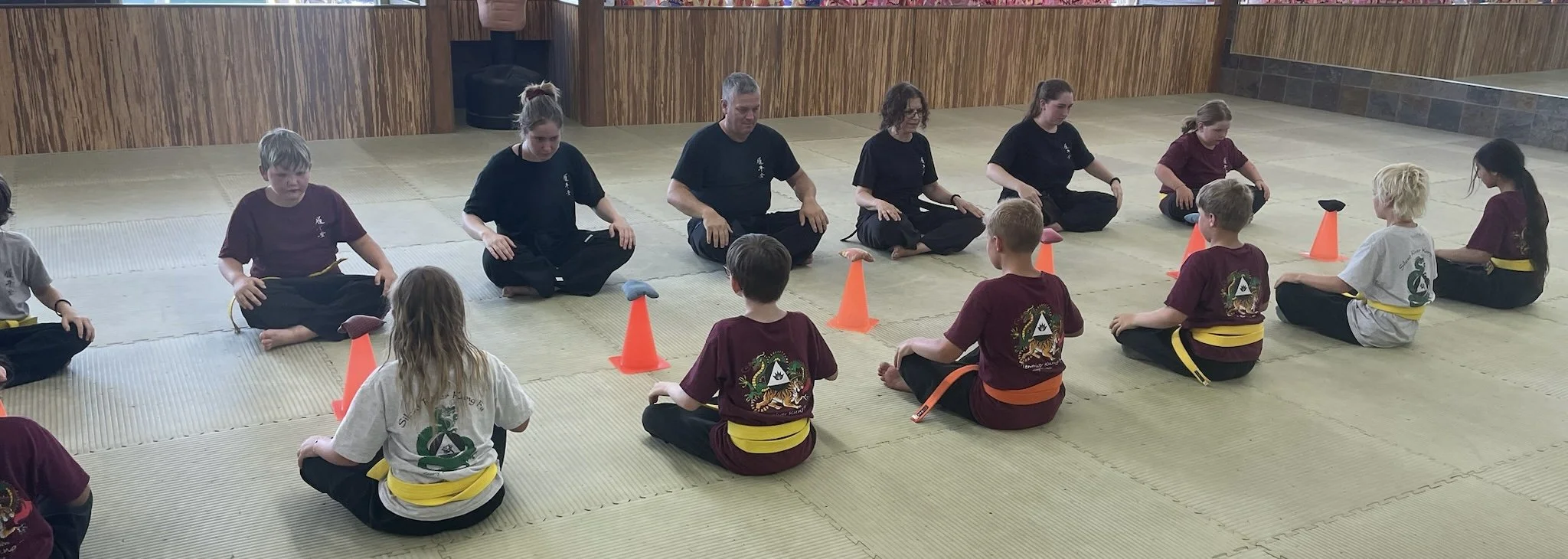
I want you all to think about this; what are we doing? As a kwoon, what are we teaching? What are our goals? What would be our ultimate home run?
Quick and easy answer is “we’re teaching Kung Fu”. This answer is the equivalent of answering “practice” when defining how to improve your Kung Fu. Well, yes. But I hope we all delve deeper when we’re working on our own Kung Fu, looking at details when improving our skill, applying our understanding after a lesson.
When teaching, the absolute ultimate goal in my mind is the overall wellbeing, now and in the future, of the student or child in front of me. I do not control their diet. I do not control their home life. I do not control any of the events they will experience, positive or otherwise. I do not control what they are taught, outside of the one or two hours a week they are within these walls.
The only way we have any influence over their wellbeing is to give them as much chance to mould it for themselves. To provide as many tools as we can to set them up for success and happiness in their lives, from the moment we meet, and hopefully beyond the last time we see each other. Lasting skills and tools, that is what we strive to provide.
Kung Fu is the vessel for this. I have not chosen to dedicate my life to Kung Fu because it taught me to kick through a board. Whoopdee doo. I give my time and energy because I know the skills it gave me and the impact they had. It opened doors for me, provided opportunities. Opportunities that I had created myself, knowingly or otherwise. Created by me due to the skills and structure given to me by my own instructors.
When developing new drills or new program initiatives, when dealing with the rest of the instructor team, when deciding how to manage a distracting child, keep this goal in mind. How are your actions (or inaction!!!) going to contribute to the wellbeing (or detriment) of the individual in front of you? Does it serve you, the program, this overarching purpose, to reprimand or to encourage? Will anyone grow?
We have an extreme amount of influence on the students, specifically the kids, for better or worse. There is no neutral on this, if you are in the room you are an influence. Your inaction tells a story to the student. Unfortunately, inactions is usually interpreted as the instructor is “too busy” or doesn’t care.
If you believed your instructors didn’t care, would you still be here? Would you have achieved your current rank? Gained any of the benefits?
Be the instructor you want. Knowledgeable, skillful, deeply involved and invested in your future. Willing to get into the thick of it with you, not just watching from the sidelines.
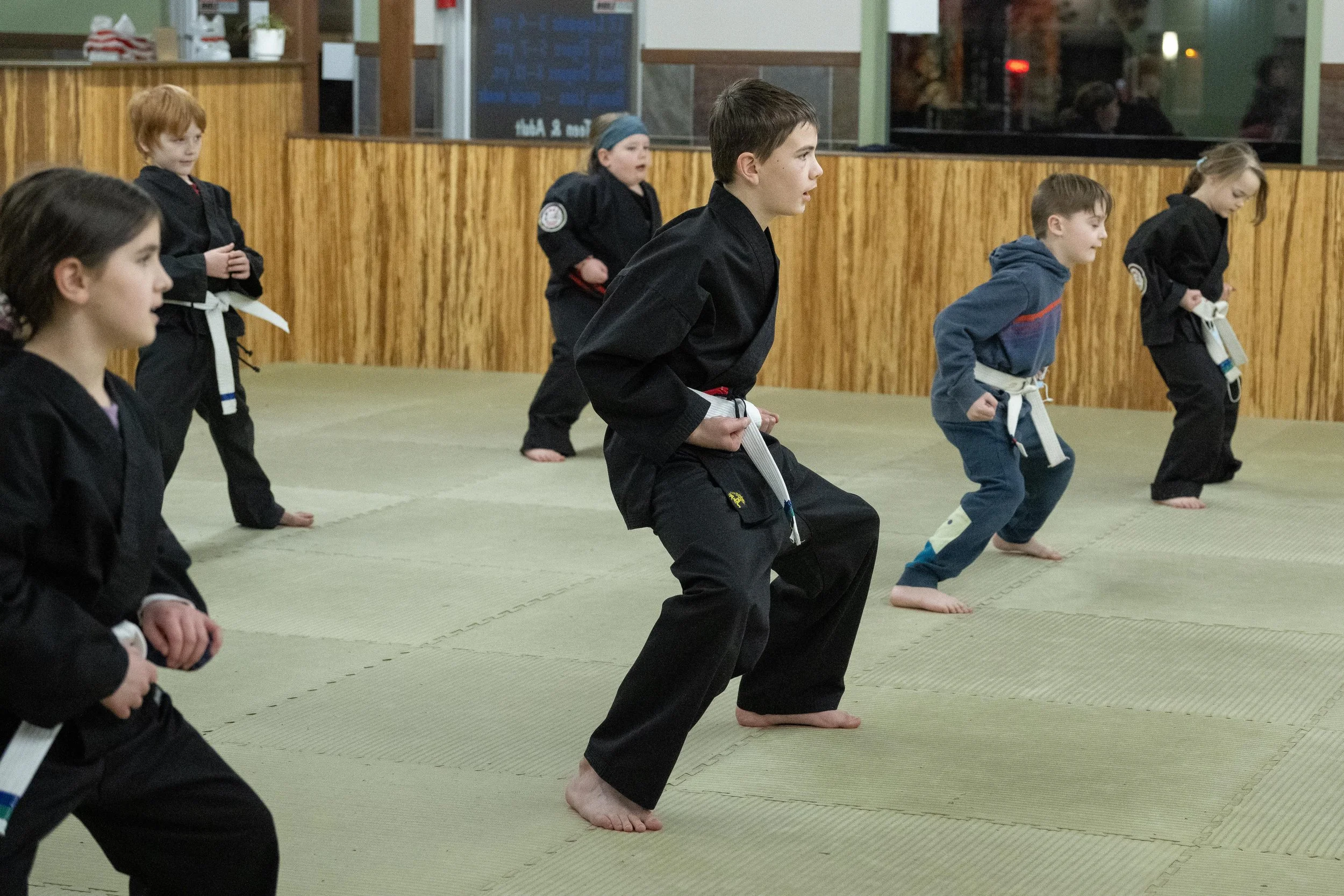
Class Management
Rank in order of importance - the art, the student, the school. This is a question every black belt is presented with before they are promoted. There are no wrong answers as all three affect each other to such a degree that there is logic supporting just about anything.
Logic or not, there is one answer that is more correct than the others. That answer is:
1) The School
2) The Student
3) The Art
Over my 40+ years of being immersed in the martial arts business, I can confidently share that the majority of martial arts businesses fail. The reason they fail is because they are run by marital artists, not business people. Tell me how it served the art of Kung Fu to have the vast majority of Kung Fu schools fail? How did their failure serve their students? Obviously the school has to be the priority because without the school there are no students. Without the students the art becomes extinct.
To ensure the long term viability of a marital art school, you must ensure you are taking care of all three - the school, the student, and the art. Because of how they are entwined, you cannot ignore any one of the three. However, you must prioritize what must be prioritized. Hence the ranking.
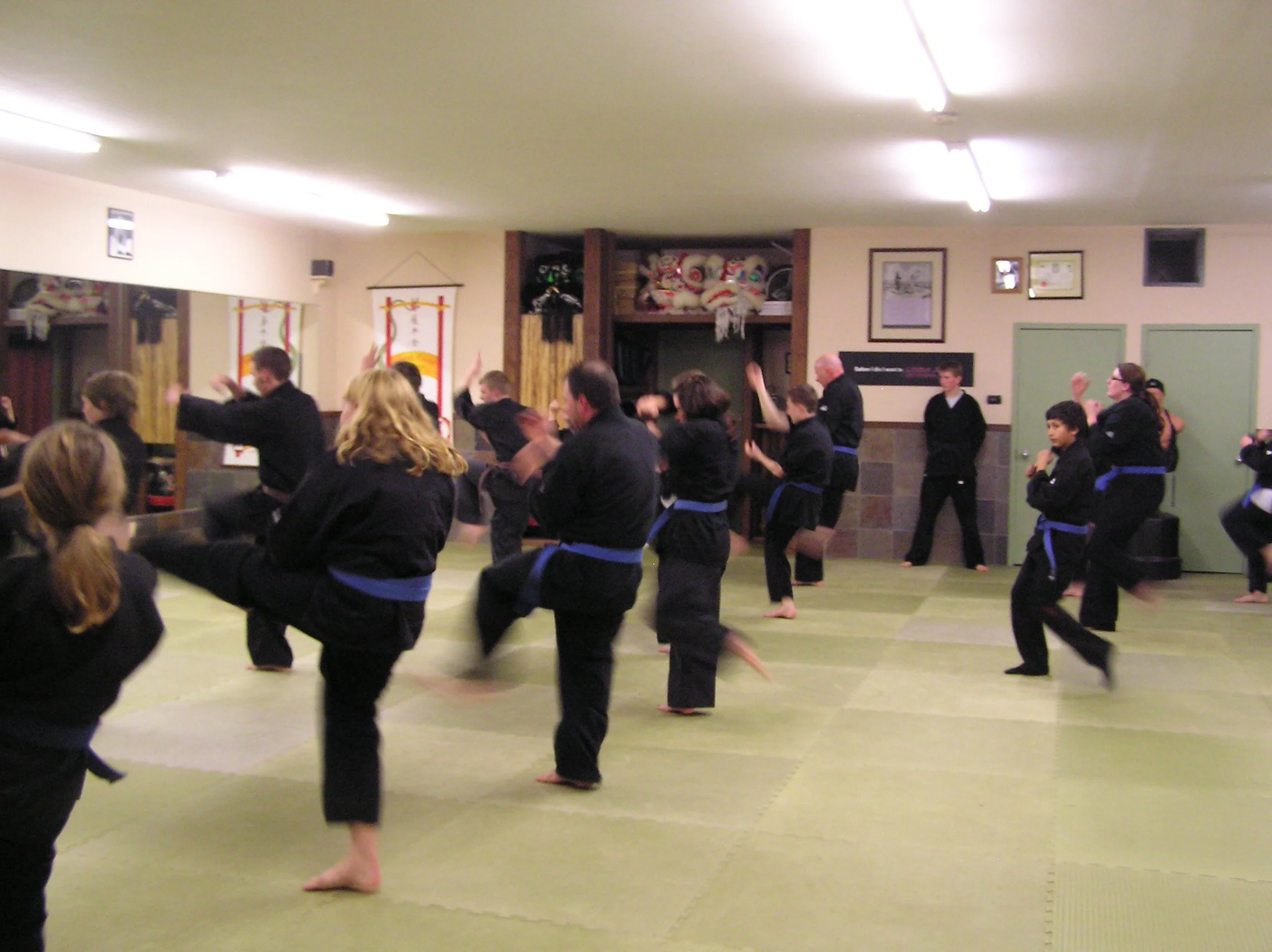
As instructors, we have responsibility to our students. They have to be our priority. That means we develop a relationship with every student and ensure that we are serving them AND we ensure that the student knows that. Taking care of the student goes beyond your direct relationship with the individual student. It must extend to CLASS MANAGEMENT.
Class management is how we organize the group and how we nurture standards of behaviour and rate of progression. Class management takes care of the majority, not the entirety. Therefore the instructors not leading the class must pay attention and take care of the struggling students so that the leader can focus on keeping the class moving forward for the majority. Every time the class leader has to stop the flow of the class to address a question or a problem, the entire class shuts down at the same time. Strong class management ensures a positive flow and outcome for the majority of our students.
School management is different from class management and it is the highest priority - always. School management falls onto the Master Instructors. The Master Instructors, especially the Chief Instructor prioritizes school management and modulates their efforts and strategies based upon the evolving needs of the school. There are going to be a lot decisions made for the sake of school management that may require a compromise to our preferred approach to class management. Regardless, school management must take priority so our approach to class management must always respect the decisions and strategies of the chief instructor when it comes to class priorities, class behaviour, instructor strategies, school curriculum, class rotation, student hierarchy, and syllabus development and implementation.
Understanding why we do things in a certain way or why we set our priorities the way we set them makes complying more effortless. However understanding and agreeing, while important, are not necessary - compliance and absolute support is. That is what it means to be part of a team and that is what it means to be a leader.
Jeff Brinker
Annual Events
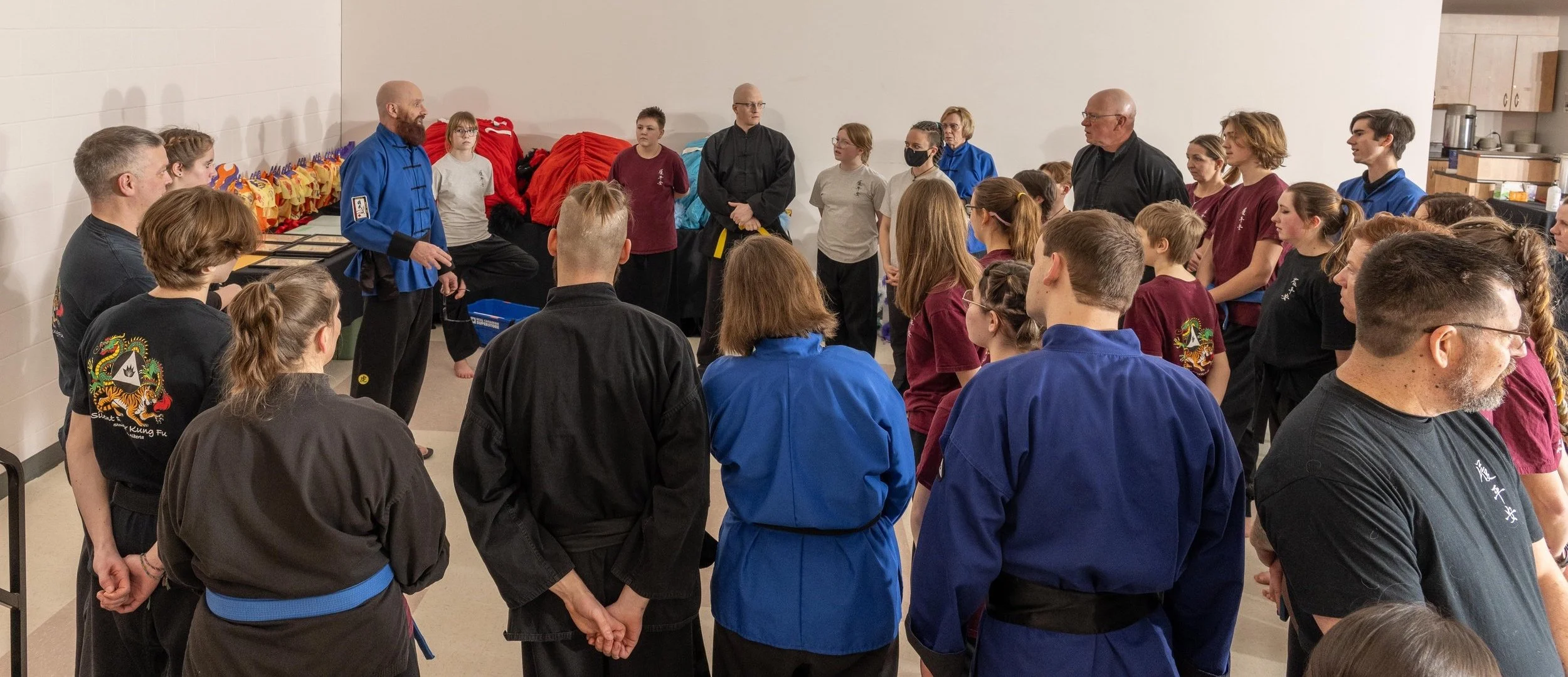
To maximize engagement and overall student retention, it is important to spread out our extra-curricular events throughout the calendar year. Moving forwards we will be scheduling our events as follows:
January/February - Chinese New Year Banquet *
January - Black Belt Presentations/Ceremony
March - Syllabus Review/Revision
April - Tiger Challenge *
May - Forms Bootcamp
June - Farmers Day Parade/Demo
July - Canada Day Demo
August - Back to School Week/Kwoon Renovations
September - Potato Bake
October - Breakathon *
November - Syllabus Review/Revision
December - Silent Auction
*Indicates viewable opportunity for Children’s Class parents.
The bi-annual Syllabus Review/Revision will give us the opportunity to address any syllabus improvement opportunities twice a year. This will ensure consistent collaboration and engagement for all instructors. It will also allow for syllabus stability and a ‘cooling off’ period where we are able to consider changes for a while before we actually decide to implement them. This will ensure less knee-jerk reactions to specific issues happening in specific classes.
Also within this schedule of events will be various Sil Lum Seminar Series events scheduled for Saturdays.
Engagement Over Correction
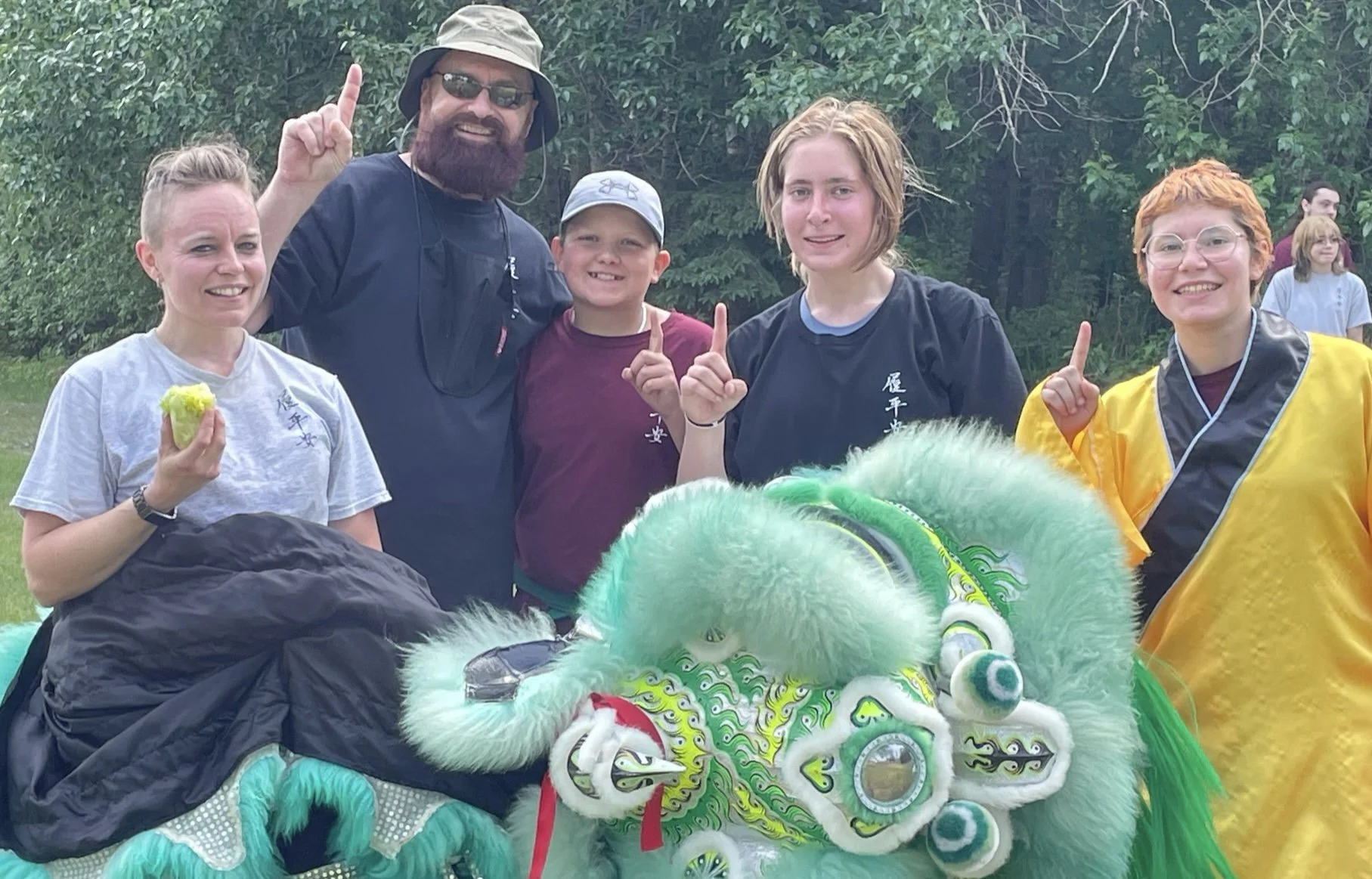
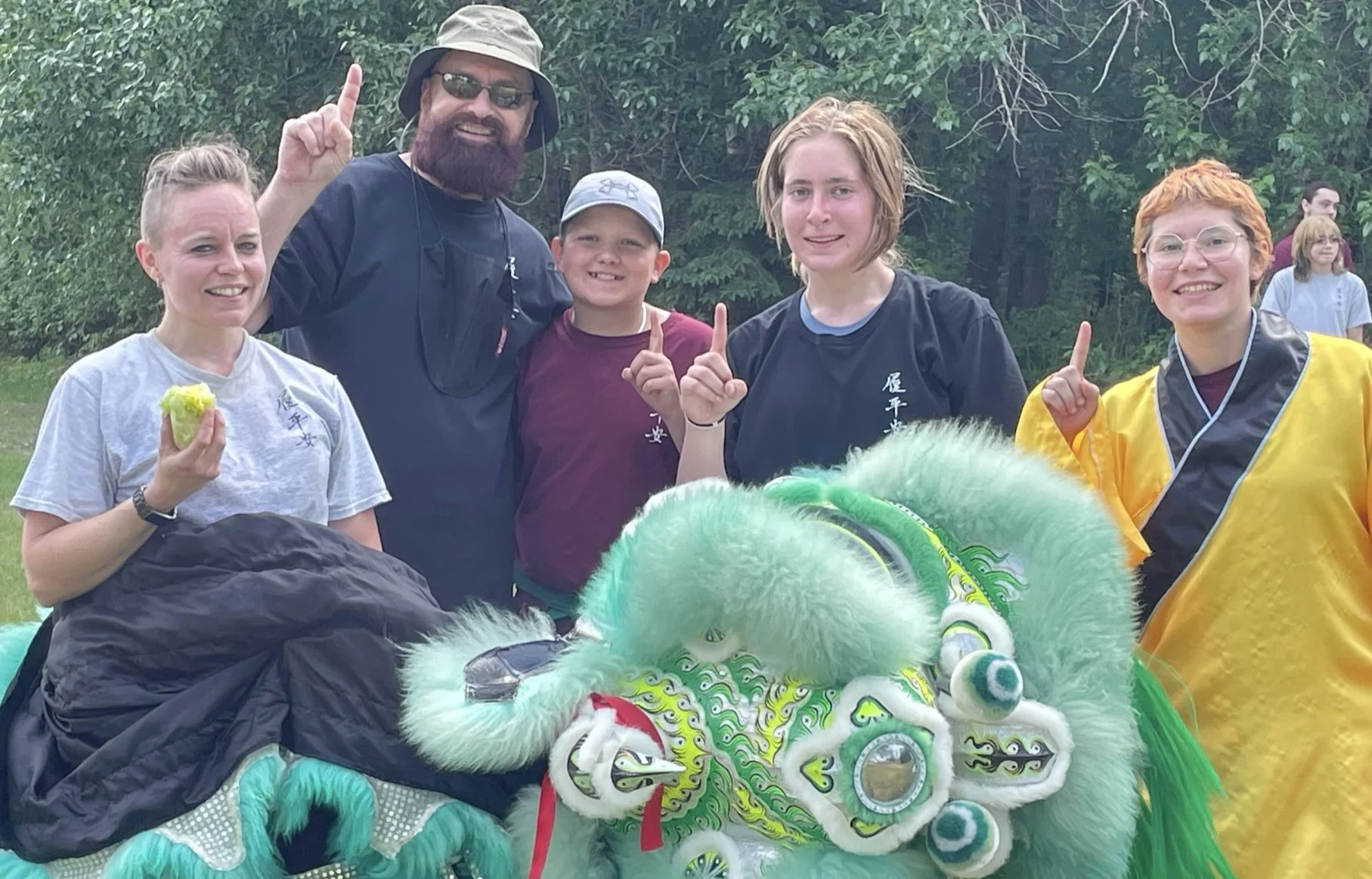
The success of any student does not rely on their natural skill or ability to apply a lesson. These things can be learned and developed over time. The primary factor is their engagement in their classes and in their success in Kung Fu.
As instructors, this has to be our mandate. Engage, don’t correct. Corrections are critical for the progress of their skill, however they are worthless and inefficient if the student is not engaged. Without engagement, they will not hear their instructors and will not feel compelled to apply the knowledge they are given. Corrections are meaningless in this situation.
Our number one job, and the number one thing on our minds each and every time we step on the mats as an instructor, is to connect with each student. Engage them, encourage them, make them feel safe and happy to be there. They need to know that their presence makes us happy, that we want them there. If we can do this for each student, child or adult, they will become receptive to our lessons.
Corrections should be a byproduct of this engagement. They should be given in the spirit of encouragement, we want them to be the best version of themselves they can be, NOT that they can do better. If what we are thinking is that they should be or need to be better, then we will portray the feeling that they are not good enough. That feeling is a potential cancer to anyone.
It doesn’t matter how quickly they progress or what challenges they currently face. Each and every hiccup is potentially a moment that will make them an even greater martial artist, IF we can help them through the slumps. If not, then it will spell the end of their time in our school. Reprimanding a student for a challenge they are facing is a sure way to push them out the door. Don’t kid yourself, each time a student pushes back or rolls their eyes is a challenge they are moving through. It is our job to help them reach the other side and be better for it.
Curricular Rotation
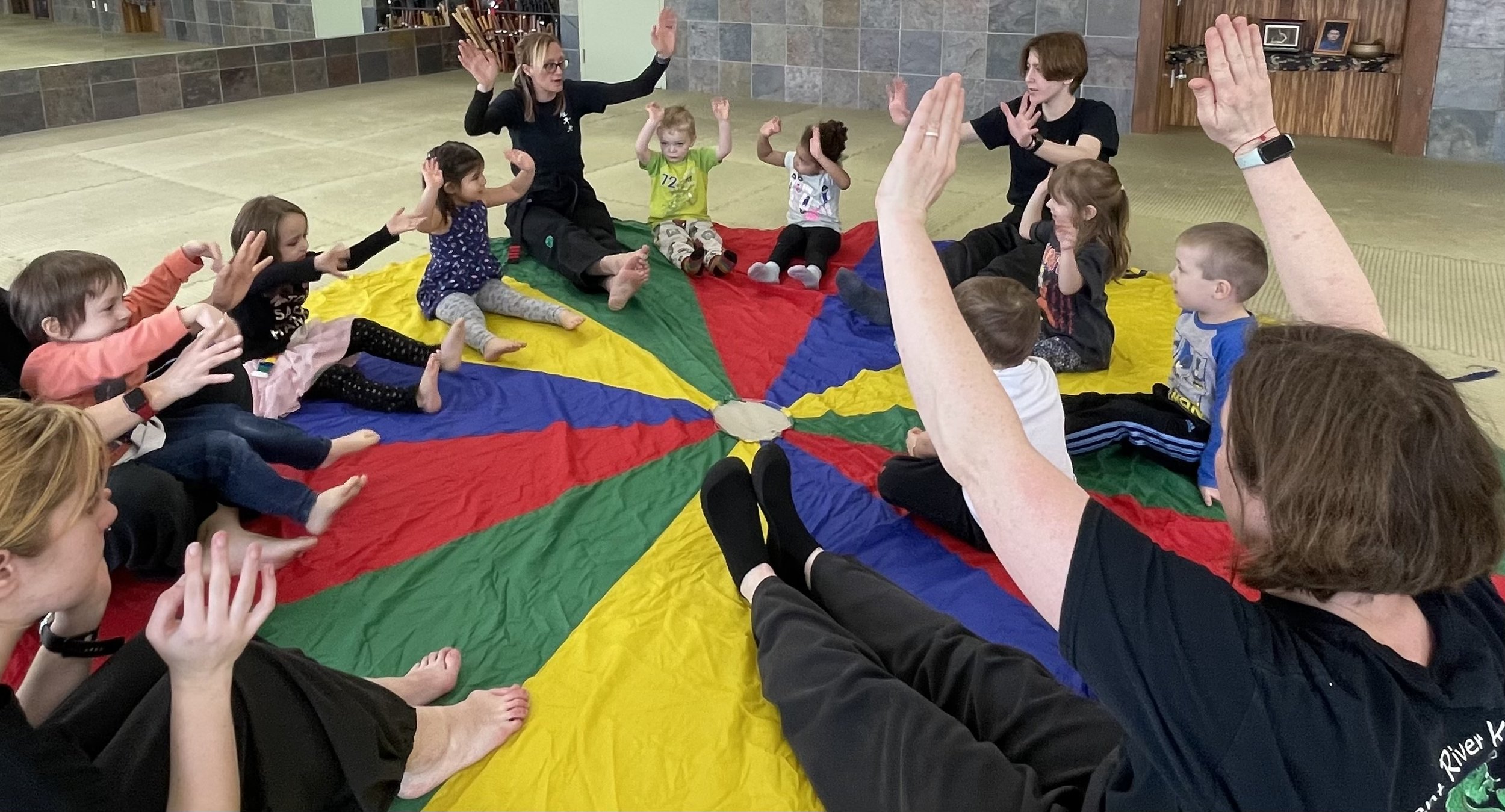
Starting this month, we are planing to start a curricular rotation for both the kids and adult classes. Part of the reason is to decrease the differences in skill and knowledge between the two.
Although our approach for each class needs to be very different, the skills and development at each level should be the same.
In an effort to determine the validity of our current set rotation, we will be documenting what activities and lessons we give in each class. We need to track and control as many variables as possible in order to determine if the rotation will work in its current state, or if we need to rethink the rotation/approach. The spreadsheet that you will be given access to is where we will be tracking both the rotation and what is covered in each class. It would be ideal if we also wrote out what our intent/approach was for each lesson, our successes and the weaknesses we noted and anything that would help us sharpen our skills and leave breadcrumbs for the next instructor.
Although we need to merge the classes, we still need to approach each class and each lesson with the needs of the students foremost in our minds. This means that we all, as leading instructors, need to plan our classes before we hit the mats, and need to make our plan while taking into consideration what the previous instructors have been teaching, what the students need to progress, and what is next in the rotation. We can’t just come unprepared and pick a lesson based on our strengths or comfort zone; in order for this to work as intended we will all need to innovate and look at the classes as a whole instead of as a single night of lessons.
Something to keep in mind, and I’m sure something we will all need to be reminded of periodically, is that we are teaching a curriculum, a set of concepts and ideals. Not a list of exercises. The syllabus, the document that lists all of the kicks, punches, applications, etc., is only a list of tools we have to help teach the curriculum, and we need to remember to approach it as such. The goal in teaching our students the Six Harmonies is NOT to teach them a long list of forms, but rather to use those forms to increase their awareness and ability to apply the Six Harmonies. Each form is useful to help us in different ways- that is what we need to be thinking of when we are teaching them. What is it about this form that further advances our goal of teaching the Six Harmonies? What concepts are hidden within it?
We are always trying to refine our approach. Hopefully, this rotation will help us ensure the success of all of our students while making the transition between programs or levels easier and more streamline. We have lost students in the past due to the culture shock, and although there always has to be differences between the classes, perhaps we can soften the shock for students as they progress in the system.

Notes on Positivity
I had a conversation with Malinda today (March 10, 2023) and wanted to capture some of what we discussed as I feel we may have put into words/ action something that we have skirted around for years. This pretty much all pertains to Emily Reich, but will definitely be a positive approach for all of our preschool and Young Dragon students.
I feel Emily might not be keeping up and repeating what she is doing because she is slower to process what we are doing (this was my observation during the warmup on Thursday March 09, 2023)
We’ve thought she was just being defiant and just does what she likes over and over but Malinda saw something in her expression the other day when she wanted to bow in again, that gave the impression that Emily was puzzled about something. So if she is doing something a second time, we shouldn’t discourage her, however we do need to stay diligent so that it doesn’t get out of hand.
Malinda chatted with her briefly about the direction she jumps after the bow and told that her bow looks great, but asked if they could try jumping to face the windows for funzies to see what would happen. Emily smiled and thought it would be fun.
This positive reinforcement will go a long way if we can stay as patient as possible and consistent.
Something else that Malinda has tried that works, is to ask Emily to show her how to do something. “Emily, I need some help, can you show me…”. I think this will also work well for Derrick and other students that seem to be struggling. It will give them a sense of “I can do this!”, will boost their confidence and should lead to more discipline.
Meeting Minutes - March 4, 2023
Jeff Brinker, Tania Vantuil, Khona Rybak, Kevin Lindstrom, Malinda Ferris, Kody Bjorkquist, Sharida Csillag, Noa Csillag, Shira Csillag. Absent: Yitzik Csillag
Shadowing: Is where a student can get through a form with help, not just following along. We need to adjust our expectations here.
Expectations: Our actions need to match our words
Set them, communicate them, enforce them.
3. Management: We are not just teaching, we are managing - manage students, manage assets, manage class.
4. Animal Badges: Can be used to help keep kids motivated while they are earning their stripes.
1. Talk to parents - these teach hard work
2. We need to promote these more
3. How do we communicate the value?
5. Drills: Make a list of drills that will NOT be done unless they are run by a program director.
1. These are drills that we go to once in a while, when our creativity starts to wane.
2. We cannot keep going to the same drills, as they lose their efficacy
6. Finishing Classes on Time: it’s imperative that we end classes on time
1. When we end classes has an effect on when the next class can start, and the upcoming class MUST start on time as we cannot have students waiting and wondering what is going on.
7. Audit the Members Only section: Make sure that members only have access to what they should
1. We need to make sure that students are only seeing the information that pertains to them.
8. Student Ratings: A, B, or C
1. Program directors will have these up to date by the end of the month each month so that the data is in almost real time.
2. Instructors are encouraged to share their thoughts on ratings, as they may see things that the Program Directors may miss. However, the Program Director has the final decision.
Student Ratings
The student rating field in our database is a powerful retention tool used to track each student’s motivational journey. Everyone’s Kung Fu journey is unique and every one of us ride a rollercoaster of motivation that sees us go through long periods of at each end of the motivational spectrum. We all can’t be ‘on’ 100% of the time.
Our ranking system is simple, with each student rated on their present state as follows:
• A - self-sufficiently motivated
• B - requires motivation to be reinforced
• C - unmotivated
Our mission as instructors is to prioritize our focus on the C students to turn them into B students. Our second priority is to turn our B students into A students. Our third priority is to ensure our A students remain A students.
This tool is only as useful if it is understood and used consistently. While Sifu Rybak is responsible for ranking all the Young Dragons, 2nd Degree Brown Belts, and Black Belts, Sihing Vantuil is responsible for ranking all the Lil leopards/Tiny Tigers, and Sihing Csillag is responsible for ranking all the Teen/Adults; every instructor should be contributing to the process by being very vocal if they see a student ranking that they do not feel is accurate. We all have unique, personal relationships with each of our students so we all have personal insights that will be useful for assisting the Program Directors in ensuring the student ratings are accurate.
To ensure the relevance of the student rating information, we need to have confidence that each rating is accurate and current. To meet this requirement we must set and respect the following policy:
• To build trust in the student rating data, all Program Directors will confirm and update each of their students’ ratings on the last day of each month. This will give us a continuous baseline for reliable minimum accuracy of 30 days.
• The entire instructor team will contribute to the process by ensuring they are vocal and engaged in policing the accuracy of the ratings.
We will further refine our policies as our experience and needs dictate. Those refinements will be discussed in our monthly meetings and this living document will be updated accordingly.
Jeff Brinker
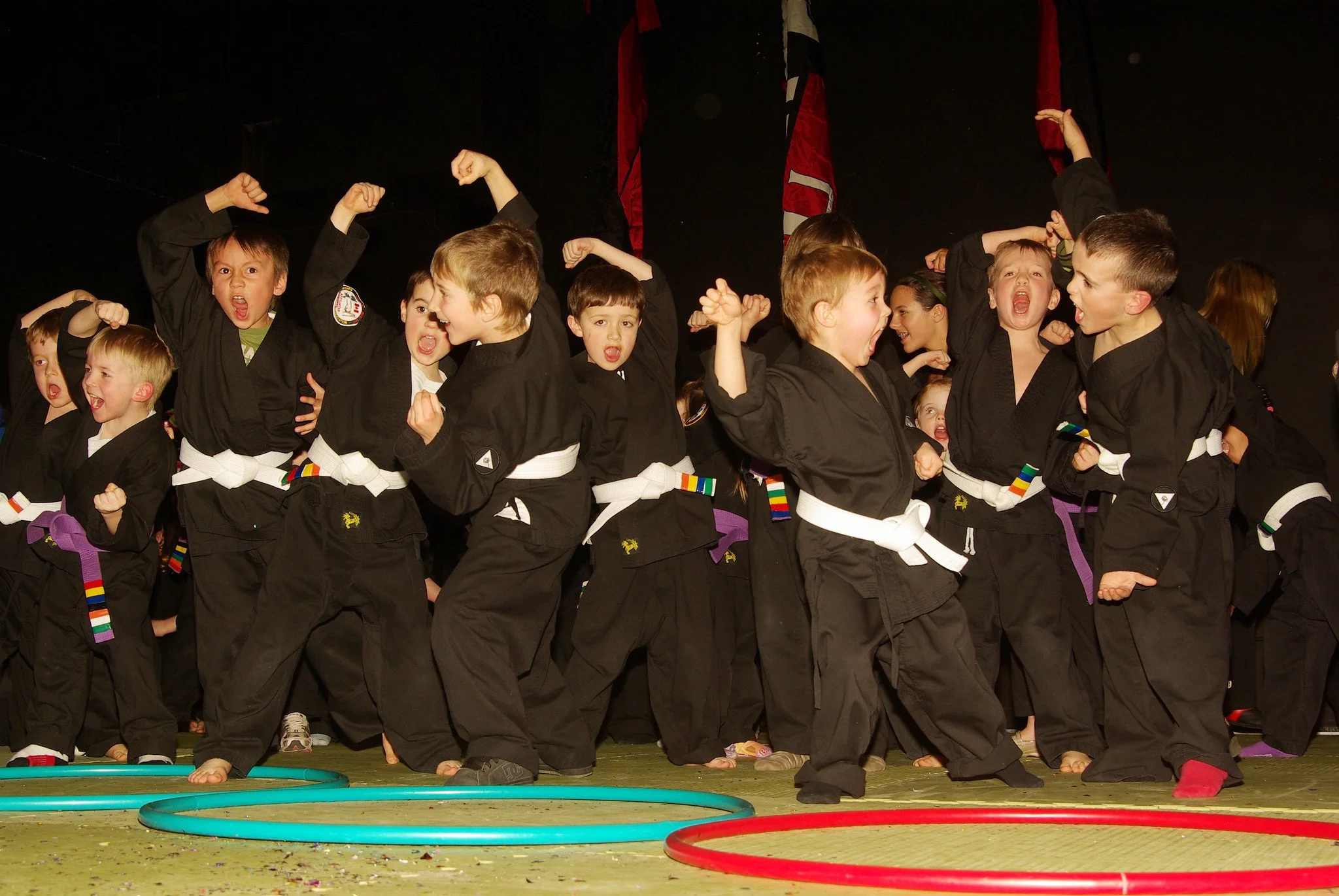
Kids' Classes Dismissal Process
Once the class has bowed out, and the students have received hand sanitizer, the dismissal process can begin.
Dismissals begin with the students at the back of the class and move towards the front. Exceptions can be made if there are siblings, who can be dismissed together at the discretion of the Instructor.
Children will collect their belongings from the changerooms and then will proceed to the entrance to collect their footwear.
Children will then proceed directly to the bench where they will sit and put on their shoes and outerwear.
Once they have their shoes and outwear on, they are to remain seated and watch for their parents/guardians out the window.
Once all children are in the penalty box area, the entrance door can be unlocked and the next class can begin to enter.
Once a child sees their parent/guardian, they are to put up their hand, indicating to the instructor that their parent is present at the exit.
The instructor will release children to their parent/guardian and ensure the parent/guardian has them in their custody.
Once all children have been released to their parents, the exit door should be locked.
General Rules And Guidelines
Children should only leave the mats at the direction of an instructor. Any child that attempts to leave without permission will be returned to their spot and will have to wait until an instructor releases them.
Should the main instructor dismissing children be tied up, other instructors or helpers should step in to keep the dismissal process flowing.
All children should be released through the penalty box door only.
No more than 3 children should be collecting their shoes at one time.
The instructor manning the exit should be dictating the order in which children are released, not the children.
Siblings should be released together.
No child should be released unless they are seated and waiting in a respectful manner.
Any children crowding the exit, or attempting to exit without the direction of the instructor, should be instructed to find a seat on the bench and should not be released until they do so, regardless of whether their parent is at the door.
Children should not be standing or walking around in the penalty box area during dismissal.
Children should only be released when it is safe to do so and a parent/guardian is present to take custody.
If a child arrived at class on their own and will be leaving in the same manner (ie. walking, bike or roller blades), the instructor should release them when they feel it is safest to do so (ie. parking lot has emptied).
Meeting Minutes - June 11, 2022
Stop asking so many questions of the kids, specifically “who knows…”. Often when you ask questions and have one kid answer the rest can’t hear and few of the others are engaged. When you ask “who knows” you won’t get an accurate answer anyways (just run them through the form and you’ll know) plus it comes across as you are not prepared.
When teaching forms, don’t do more than a single rep with the whole class (specifically level 1’s). It causes frustration for the kids who don’t know the form and are being left behind. Get them to go through it together to determine what groups you should create.
Don’t explain drills so much. Especially if drills are constantly changing/evolving. You’re losing most of the class. Just get them moving and the rest of the instructors can do the rest. Less yak, more smack.
No class should end on a downer or negative note. Class structure should be high energy, followed by the meat, finishing with high energy.
Gauge your classes mostly based on the back rows, or the kids who are less engaged. Running a class based on the most engaged kids all the time will while leaving behind the others only causes frustration. Too much of a gap, break up the class.
There should be one person leading the class, the rest are teaching (wandering corrections). If you’re running the class, that should be your main job, all other instructors on deck should be continuously engaging with the kids.
Teaching is found in the interactions with the students, not in the drills. You have to connect with the kids. Find talk to them, get to know them, encourage them. Encouragement is a much stronger tool than punishment.
Meeting Minutes - June 11, 2022
Stop asking so many questions of the kids, specifically “who knows…”. Often when you ask questions and have one kid answer the rest can’t hear and few of the others are engaged. When you ask “who knows” you won’t get an accurate answer anyways (just run them through the form and you’ll know) plus it comes across as you are not prepared.
When teaching forms, don’t do more than a single rep with the whole class (specifically level 1’s). It causes frustration for the kids who don’t know the form and are being left behind. Get them to go through it together to determine what groups you should create.
Don’t explain drills so much. Especially if drills are constantly changing/evolving. You’re losing most of the class. Just get them moving and the rest of the instructors can do the rest. Less yak, more smack.
No class should end on a downer or negative note. Class structure should be high energy, followed by the meat, finishing with high energy.
Gauge your classes mostly based on the back rows, or the kids who are less engaged. Running a class based on the most engaged kids all the time will while leaving behind the others only causes frustration. Too much of a gap, break up the class.
There should be one person leading the class, the rest are teaching (wandering corrections). If you’re running the class, that should be your main job, all other instructors on deck should be continuously engaging with the kids.
Teaching is found in the interactions with the students, not in the drills. You have to connect with the kids. Find talk to them, get to know them, encourage them. Encouragement is a much stronger tool than punishment.

1 on 1 Attendance Policy
To reflect the difficulty inherent with having to double enter appointments into Square so we can track student use of One on One opportunities, we are not going to do it. What we will do though is chart by exception. This means we will assume that everyone who books a one on one is attending their one on ones. If they are no show, you need to inform me in real time so that I can record it. I stress real time because best intentions rarely translates to follow through. Also, if I need to generate a report, I do not want to have to poll you all first to ensure the data is correct. I need to be able to count on the data I am mining out as being 100% accurate.
Can you guys please confirm that you agree with and understand this approach? I am good with discussion if someone has an idea that may be better.