
SRKF Emergency Response Plan
This is a living document, so please review it on a consistent basis. Reach out if you have any questions.
Our Approach While Teaching
Sifu Brinker has a saying, one I find myself referring back to time and again. You can’t force something down a students’ throat. You need to get them to open their mouths first.
What is a sure fire way to cause a student to stop being receptive, to close their mouths? It’s the same for everyone. You and me as well. Put them on the defence. Raise their hackles. Lose their respect. This is the biggest thing we need to avoid doing.
If a student feels they are being judged, you have lost the ability to teach them. Period. As instructors, we need to be diligently mindful of our attitude and demeanour. Having a condescending attitude? Absolute worst way to approach teaching. As instructors you rely on your students to learn, but if they are not, if they are not applying the lessons you have been giving them, THAT IS ON YOU AS THE INSTRUCTOR. Do they have a crap attitude? Yep, on you. Not a phase, not a result their age, not due to the weather or season.
Why do they have a poor attitude? Because they do not have a reason to change it. Why are they not picking up or applying the lesson? Because it has not reached them yet. It could be a matter of learning style, immaturity or maybe they had a bad day. As instructors, you need to have your finger on the pulse of your students and class, to identify the underlying issues and then change your approach accordingly. Not every student learns the same way. Not every student is motivated by the same things. You cannot approach your classes with a one size fits all attitude, because all you will do is alienate and eliminate those students who do not fit into the structure you have decided on.
What does this look like? Taking accountability for your students shortcomings. They have come to us to learn. If they are not learning it is because of our failure to teach them in a way that they can learn from. If they have a bad attitude we need to inspire them, not write them off. We will most likely hit walls in our attempts, but if we are not trying to change the situation or even take an interest in trying to change it, that student is as good as gone. And our school cannot survive without students.
Check your own attitude before pointing a finger at your students. You cannot expect them to know a thing until it has been taught effectively. You cannot expect them to have the ability until you give them a chance to practice and apply it. Talk less, lecture less. Inspire more, teach more. Be invested in your students and their success. Take responsibility for their failures. This is the only way you will have the ability to do anything about it. It’s not about pointing fingers at anyone. It’s about taking accountability, which will give you control and the ability to influence the outcome.

Opportunities, Potential and Mistakes
Let’s be clear- opportunities are not given, they are taken. Someone can create an opportunity for you, but if you do not help yourself and DO something with it, then it’s just a missed opportunity. No matter how badly I may want it for you, I cannot make you take it.
When it comes to teaching, as an instructor on deck I have a world of opportunity, but that does not mean that I will necessarily take advantage of it. If I decide not to engage with a student on a personal level, then I have lost the opportunity to get to know that individual, to gain their trust and therefore have the ability to influence, and the opportunity to grow in my own skills as an instructor. This is just one example.
Some of you are okay with that. I’m okay with that if that is what you want, but know that you are throwing away opportunity and your own potential. In other words, you will not advance to the master level.
If you want more from the classes you attend, then you have to do more with them. Engage on a deeper level. Let me be clear; this has nothing to do with whoever is in charge, this has to do with how attentive you are as both student and teacher, often at the same time. I can be in charge of the black belt class, the “top dog” so to speak, but if I cannot keep my ego in check, if I am more concerned with how others perceive me, then I will miss the chance to learn something when Sihing Csillag asks a question on zoom, or Sihing Burke asks about what something feels like. These are MY opportunities, as much as theirs. They seek my knowledge, I gain wisdom in exploring the answer with them. And don’t get me wrong, I am exploring the answer at the same time as you are hearing it.
And I grow, because I am okay knowing I don’t know it all, that I make mistakes. Mistakes are opportunities too, if you choose to let them be.
The opportunities are endless, the potential is beyond what you can perceive. IF your approach is open, if you are honest in your ability, strengths, weaknesses. If you are able to acknowledge what is the truth about you. If you are able to let go of your ego, your need to be seen in a certain light.
Don’t ask for opportunities. Create them. Take them.
Make mistakes. Make lots of mistakes. Learn from them. If you’re afraid of making a mistake then, ironically enough, that in itself is a mistake.
The only wrong mistake is the one you refuse to learn from.
A 3 Step Approach
Teaching children can be tricky and is much different than teaching adults. Adults will more often have a longer attention span and can handle a bit more theory within the lesson. Adults have typically made the choice to be there and to learn, where as kids, on the other hand, are really only interested in having fun. So we either need to find a way to make the content fun or we hide the content inside the fun.
I have found some fairly consistent success with a certain approach that I’ve been utilizing for a while and I thought it might be worth sharing. This is definitely not the only approach, but hopefully it’s one you might be able to add to your repertoire. As I go through these steps, I will also share the example of a recent lesson where we worked on the roundhouse kick.
Part 1 - The Knowledge. Fun.
Part 2 - The Focus. Funner.
Part 3 - The Application. Funnest.
The Knowledge
This portion should come first and needs to be kept short. It can be used as a refresher for the older students, and/or as a brief introduction for the newer ones. You really only have their attention for maybe about 3-4 minutes here, max. Although this would be considered the “theory” portion of the lesson, it cannot just be talking, and needs to be balanced with doing. In fact, the doing should lead the lesson, not the talking. They also still need an opportunity within here to move and have some fun as well.
Roundhouse Example. We stayed set up as a full class with an instructor at the front. The Instructor immediately had them go into a bow stance (they did NOT start with talking) and had them do a few roundhouse reps. Then, while still in a bow stance, they started to refresh the class on the components of the roundhouse and took them through a few more reps in a “step-by-step” format, challenging their balance and having some laughs with it. They finished with the last few at full speed once again. This portion was kept short but active.
The Focus
This portion is a specific aspect that you want to work on and would also likely be the bulk of the lesson. So within the overall lesson, what will your main objective be for this particular class? Ideally, this is an activity where the student isn’t repeatedly TOLD what they should be working on, but rather is a fun game or challenge by which they will have no option BUT to work on said skill.
Roundhouse Example. We partnered the students up and had them find a dot along the ponywall. The first partner held the wall for stability while doing a roundhouse kick, up to and including the 3-point. While holding that 3-point, their partner then placed a bean bag on their ankle, from which point they were challenged to complete the kick (slowly) as many times as they could without dropping the bean bag. As far as the students were concerned, this was a “don’t drop the bean bag game”, which for them was a fun challenge. But in actual fact, they were working on their proper 3-point, their body alignment and hip strength.


The Application
This portion comes last and should be the most fun. We want to end the overall lesson on a really high note. This is also the students opportunity to apply what they were just working on and for the instructors to see how much of it potentially sunk in. I think of this section as “organized chaos” and should be fast paced with smiles and pink cheeks by the end. At this point in the lesson, I would be looking less to correct any of the students, and more just taking mental notes of what needs work the next time.
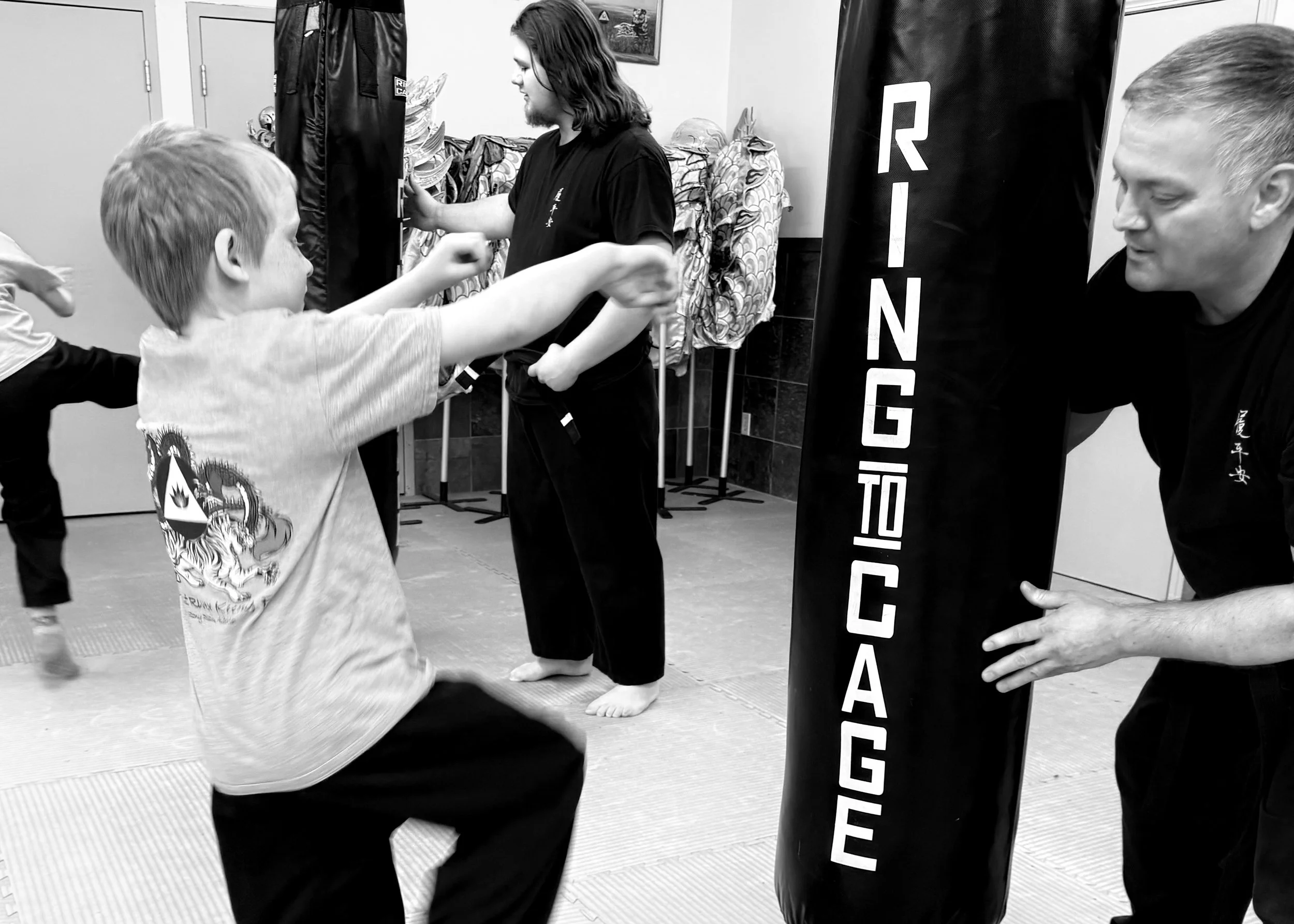
Roundhouse Example. We separated the students into groups lined up towards the heavy bags. They were challenged to run to the bag and then had to do 1 or more roundhouses at the direction of the instructor at that bag. The first round may have been a low roundhouse. The second, high then low. Third, high, low, high. And so on. The final round they got to do their best flying roundhouse.

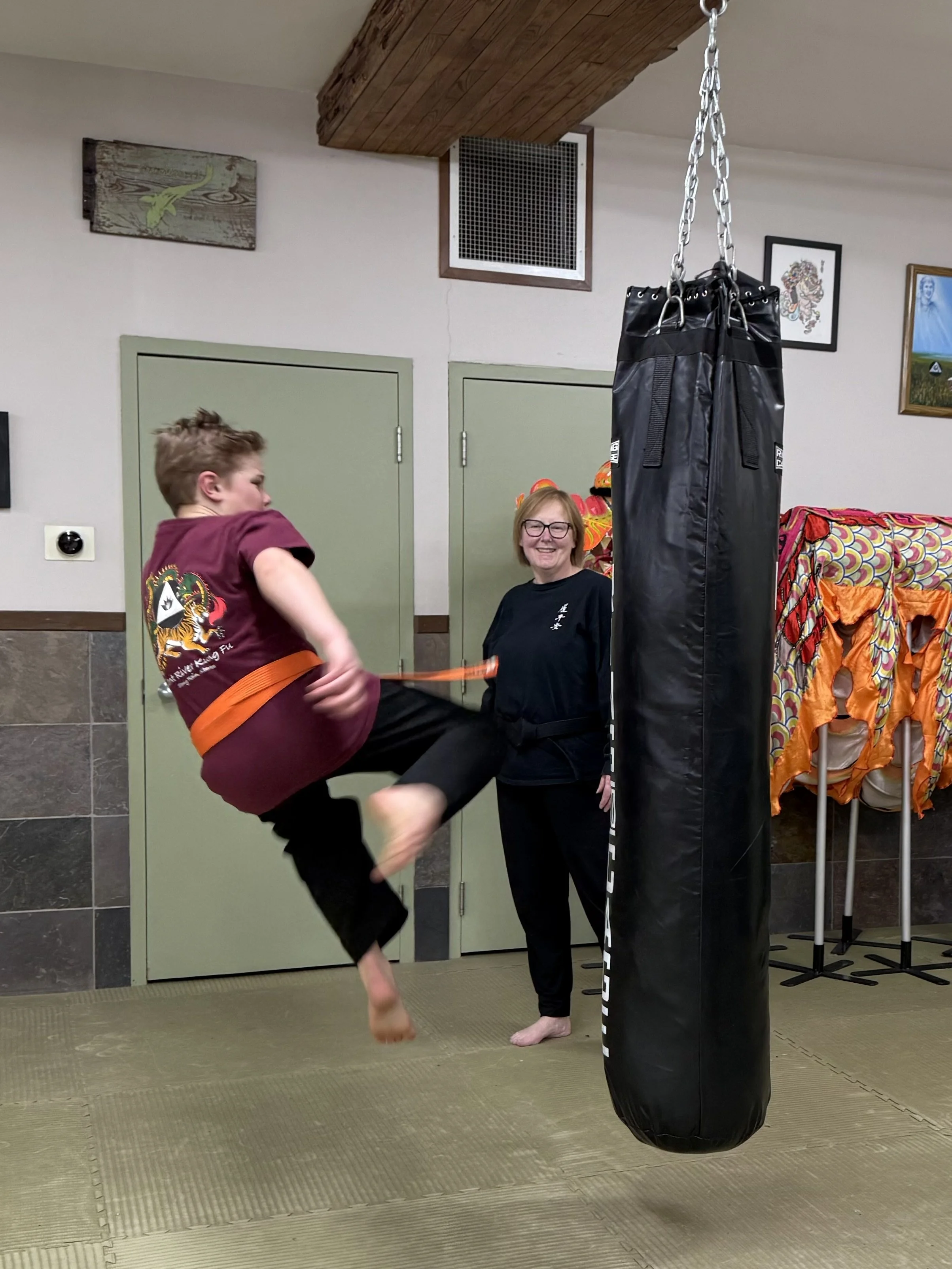
By the end of this particular class, I was really impressed by how their technique was looking in the Application portion. Everyone was pivoting and getting that proper body alignment that they had gotten used to along the wall, and many were implementing really good 3-points as well, especially when challenged with those different height kicks. And they were having a blast at the same time.
What truly made me realize that this approach had some benefits, was when Sihing N Csillag planned their next class on the side heel in the same format. It was essentially the same general setup, with different content, and the students didn’t even notice. At the same time, they were able to reiterate some of the similar skills between the roundhouse and the side heel (ie. the pivot and body positioning) and by the end of the second class we were seeing some really amazing progress. Sidenote: This is now making me take a good look at what lessons might work really well back to back.
When we discover a successful drill, our instinct tells us we need to replicate it exactly so that we get the same result. But what tends to happen is we will use it over and over to the point that it becomes old and boring, no longer having the same effect. Instead of copying the drill itself, I’m trying to figure out what made that drill successful and then replicate the approach. I think if we can figure out how to do that, the potential for successful drills, and successful classes, become endless.
Malinda Ferris
Instructor Investment and Engagement
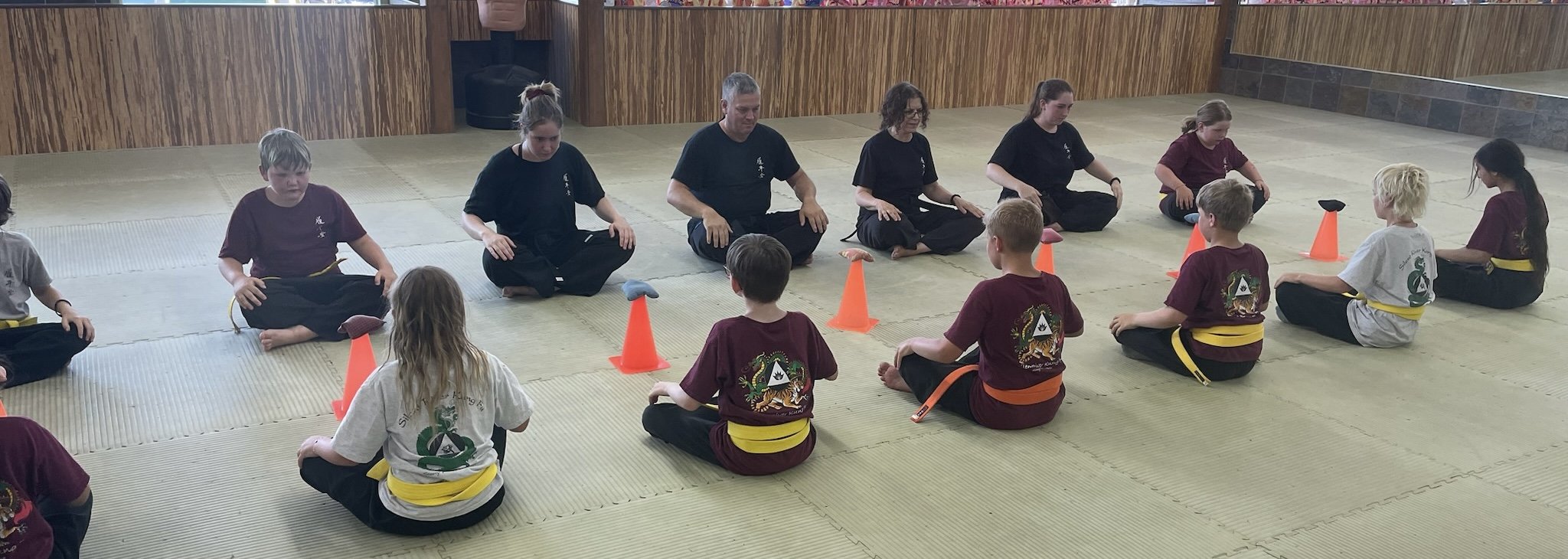
I want you all to think about this; what are we doing? As a kwoon, what are we teaching? What are our goals? What would be our ultimate home run?
Quick and easy answer is “we’re teaching Kung Fu”. This answer is the equivalent of answering “practice” when defining how to improve your Kung Fu. Well, yes. But I hope we all delve deeper when we’re working on our own Kung Fu, looking at details when improving our skill, applying our understanding after a lesson.
When teaching, the absolute ultimate goal in my mind is the overall wellbeing, now and in the future, of the student or child in front of me. I do not control their diet. I do not control their home life. I do not control any of the events they will experience, positive or otherwise. I do not control what they are taught, outside of the one or two hours a week they are within these walls.
The only way we have any influence over their wellbeing is to give them as much chance to mould it for themselves. To provide as many tools as we can to set them up for success and happiness in their lives, from the moment we meet, and hopefully beyond the last time we see each other. Lasting skills and tools, that is what we strive to provide.
Kung Fu is the vessel for this. I have not chosen to dedicate my life to Kung Fu because it taught me to kick through a board. Whoopdee doo. I give my time and energy because I know the skills it gave me and the impact they had. It opened doors for me, provided opportunities. Opportunities that I had created myself, knowingly or otherwise. Created by me due to the skills and structure given to me by my own instructors.
When developing new drills or new program initiatives, when dealing with the rest of the instructor team, when deciding how to manage a distracting child, keep this goal in mind. How are your actions (or inaction!!!) going to contribute to the wellbeing (or detriment) of the individual in front of you? Does it serve you, the program, this overarching purpose, to reprimand or to encourage? Will anyone grow?
We have an extreme amount of influence on the students, specifically the kids, for better or worse. There is no neutral on this, if you are in the room you are an influence. Your inaction tells a story to the student. Unfortunately, inactions is usually interpreted as the instructor is “too busy” or doesn’t care.
If you believed your instructors didn’t care, would you still be here? Would you have achieved your current rank? Gained any of the benefits?
Be the instructor you want. Knowledgeable, skillful, deeply involved and invested in your future. Willing to get into the thick of it with you, not just watching from the sidelines.
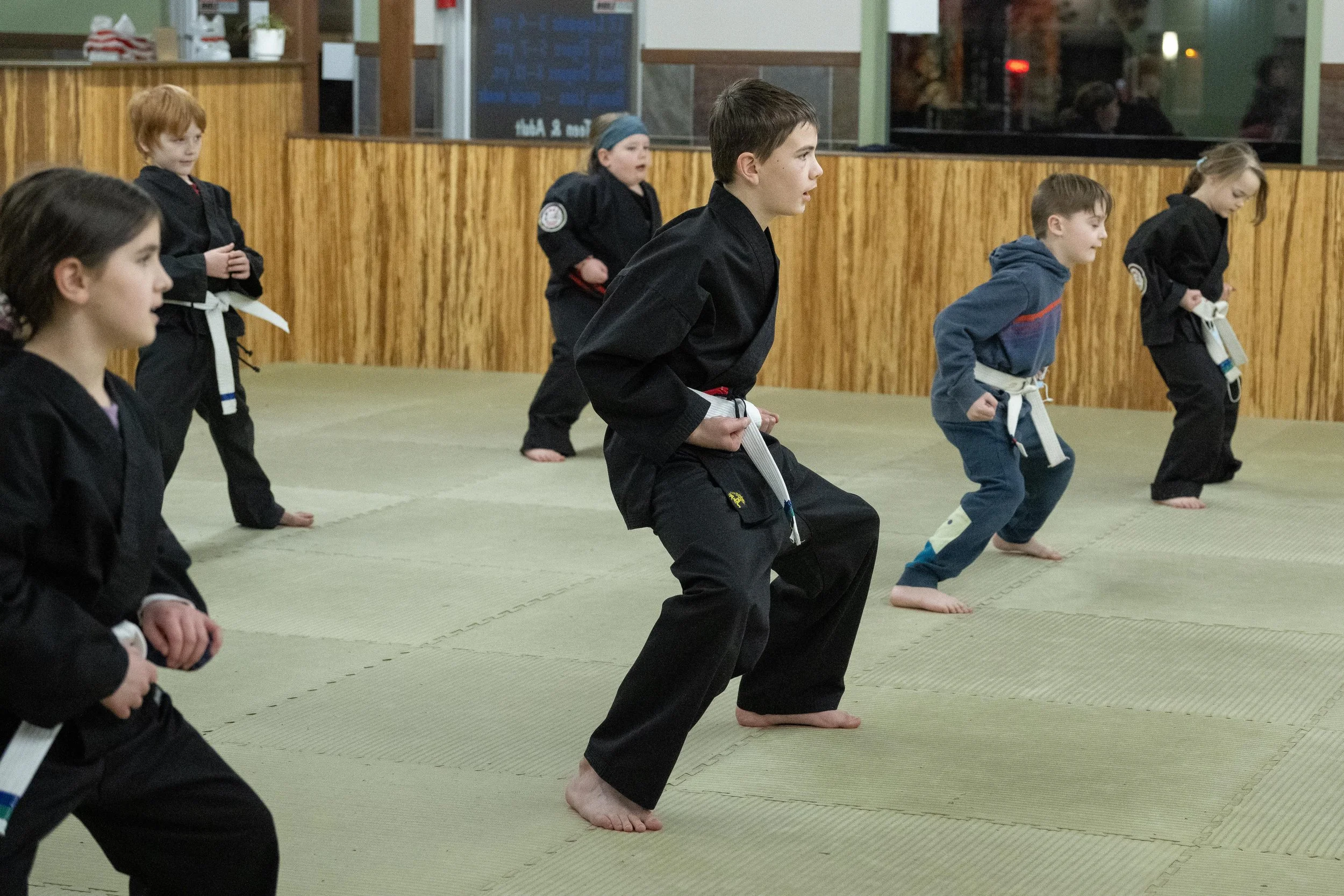
Class Management
Rank in order of importance - the art, the student, the school. This is a question every black belt is presented with before they are promoted. There are no wrong answers as all three affect each other to such a degree that there is logic supporting just about anything.
Logic or not, there is one answer that is more correct than the others. That answer is:
1) The School
2) The Student
3) The Art
Over my 40+ years of being immersed in the martial arts business, I can confidently share that the majority of martial arts businesses fail. The reason they fail is because they are run by marital artists, not business people. Tell me how it served the art of Kung Fu to have the vast majority of Kung Fu schools fail? How did their failure serve their students? Obviously the school has to be the priority because without the school there are no students. Without the students the art becomes extinct.
To ensure the long term viability of a marital art school, you must ensure you are taking care of all three - the school, the student, and the art. Because of how they are entwined, you cannot ignore any one of the three. However, you must prioritize what must be prioritized. Hence the ranking.
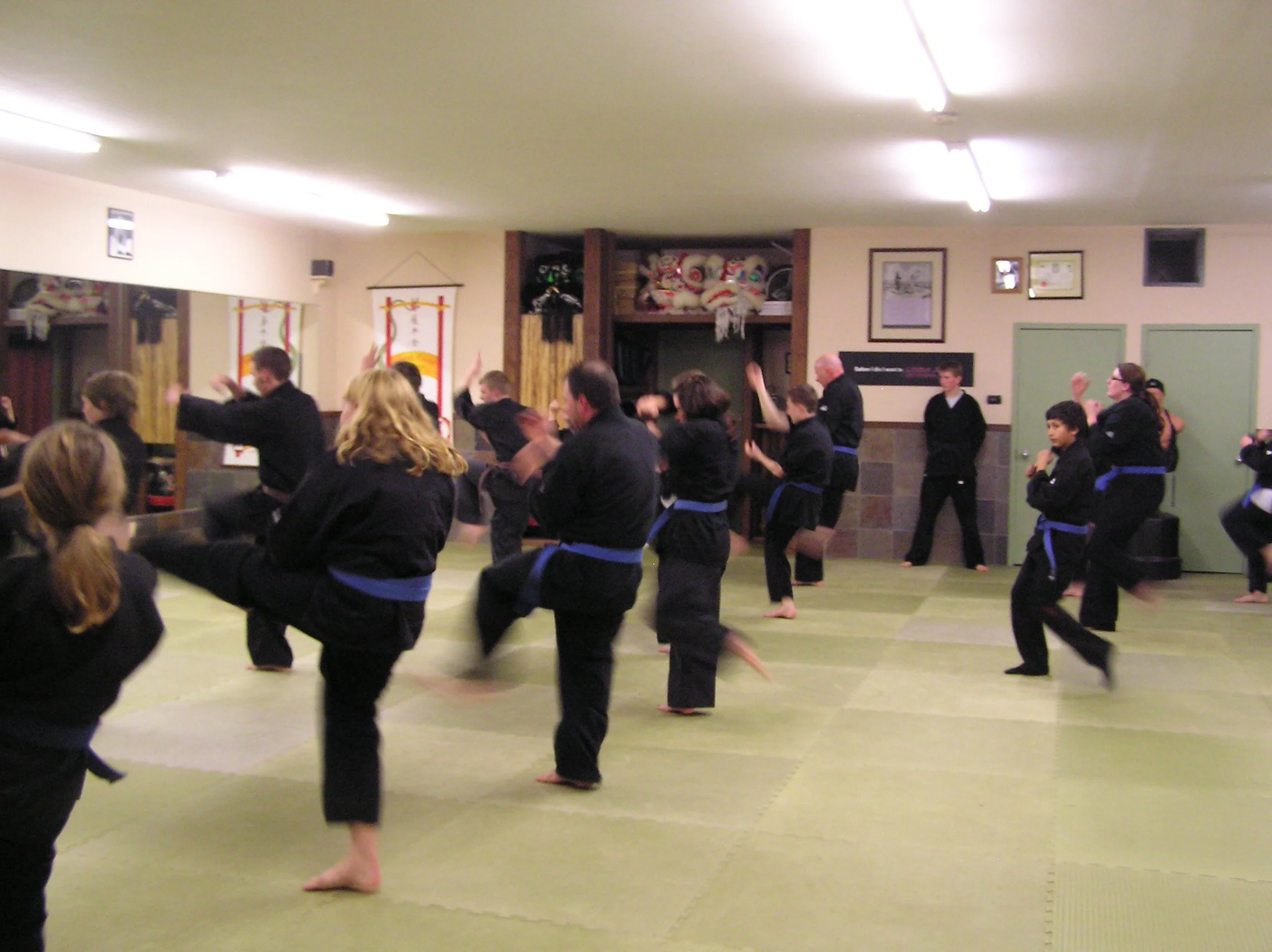
As instructors, we have responsibility to our students. They have to be our priority. That means we develop a relationship with every student and ensure that we are serving them AND we ensure that the student knows that. Taking care of the student goes beyond your direct relationship with the individual student. It must extend to CLASS MANAGEMENT.
Class management is how we organize the group and how we nurture standards of behaviour and rate of progression. Class management takes care of the majority, not the entirety. Therefore the instructors not leading the class must pay attention and take care of the struggling students so that the leader can focus on keeping the class moving forward for the majority. Every time the class leader has to stop the flow of the class to address a question or a problem, the entire class shuts down at the same time. Strong class management ensures a positive flow and outcome for the majority of our students.
School management is different from class management and it is the highest priority - always. School management falls onto the Master Instructors. The Master Instructors, especially the Chief Instructor prioritizes school management and modulates their efforts and strategies based upon the evolving needs of the school. There are going to be a lot decisions made for the sake of school management that may require a compromise to our preferred approach to class management. Regardless, school management must take priority so our approach to class management must always respect the decisions and strategies of the chief instructor when it comes to class priorities, class behaviour, instructor strategies, school curriculum, class rotation, student hierarchy, and syllabus development and implementation.
Understanding why we do things in a certain way or why we set our priorities the way we set them makes complying more effortless. However understanding and agreeing, while important, are not necessary - compliance and absolute support is. That is what it means to be part of a team and that is what it means to be a leader.
Jeff Brinker
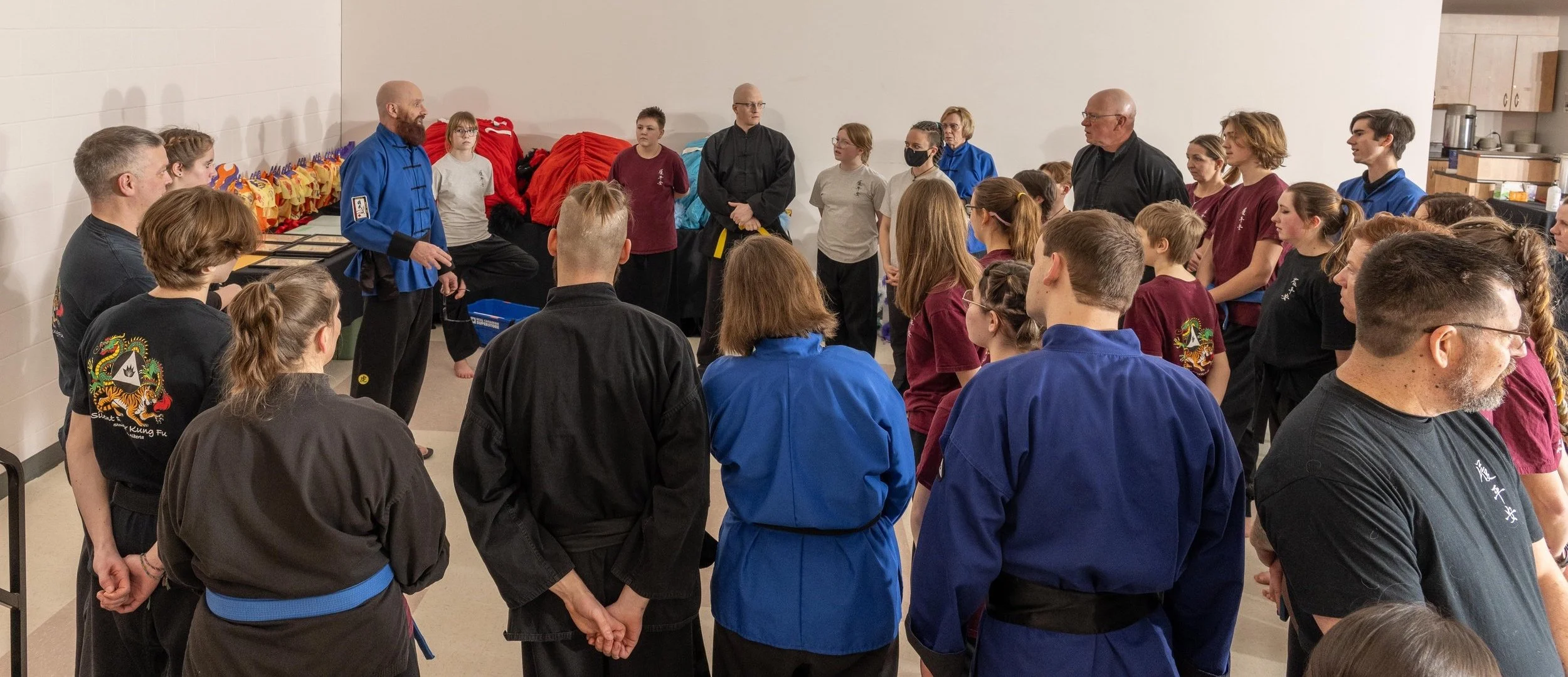
Annual Events
To maximize engagement and overall student retention, it is important to spread out our extra-curricular events throughout the calendar year. Moving forwards we will be scheduling our events as follows:
January/February - Chinese New Year Banquet *
January - Black Belt Presentations/Ceremony
March - Syllabus Review/Revision
April - Tiger Challenge *
May - Forms Bootcamp
June - Farmers Day Parade/Demo
July - Canada Day Demo
August - Back to School Week/Kwoon Renovations
September - Potato Bake
October - Breakathon *
November - Syllabus Review/Revision
December - Silent Auction
*Indicates viewable opportunity for Children’s Class parents.
The bi-annual Syllabus Review/Revision will give us the opportunity to address any syllabus improvement opportunities twice a year. This will ensure consistent collaboration and engagement for all instructors. It will also allow for syllabus stability and a ‘cooling off’ period where we are able to consider changes for a while before we actually decide to implement them. This will ensure less knee-jerk reactions to specific issues happening in specific classes.
Also within this schedule of events will be various Sil Lum Seminar Series events scheduled for Saturdays.
Engagement Over Correction
The success of any student does not rely on their natural skill or ability to apply a lesson. These things can be learned and developed over time. The primary factor is their engagement in their classes and in their success in Kung Fu.
As instructors, this has to be our mandate. Engage, don’t correct. Corrections are critical for the progress of their skill, however they are worthless and inefficient if the student is not engaged. Without engagement, they will not hear their instructors and will not feel compelled to apply the knowledge they are given. Corrections are meaningless in this situation.
Our number one job, and the number one thing on our minds each and every time we step on the mats as an instructor, is to connect with each student. Engage them, encourage them, make them feel safe and happy to be there. They need to know that their presence makes us happy, that we want them there. If we can do this for each student, child or adult, they will become receptive to our lessons.
Corrections should be a byproduct of this engagement. They should be given in the spirit of encouragement, we want them to be the best version of themselves they can be, NOT that they can do better. If what we are thinking is that they should be or need to be better, then we will portray the feeling that they are not good enough. That feeling is a potential cancer to anyone.
It doesn’t matter how quickly they progress or what challenges they currently face. Each and every hiccup is potentially a moment that will make them an even greater martial artist, IF we can help them through the slumps. If not, then it will spell the end of their time in our school. Reprimanding a student for a challenge they are facing is a sure way to push them out the door. Don’t kid yourself, each time a student pushes back or rolls their eyes is a challenge they are moving through. It is our job to help them reach the other side and be better for it.
Curricular Rotation
Starting this month, we are planing to start a curricular rotation for both the kids and adult classes. Part of the reason is to decrease the differences in skill and knowledge between the two.
Although our approach for each class needs to be very different, the skills and development at each level should be the same.
In an effort to determine the validity of our current set rotation, we will be documenting what activities and lessons we give in each class. We need to track and control as many variables as possible in order to determine if the rotation will work in its current state, or if we need to rethink the rotation/approach. The spreadsheet that you will be given access to is where we will be tracking both the rotation and what is covered in each class. It would be ideal if we also wrote out what our intent/approach was for each lesson, our successes and the weaknesses we noted and anything that would help us sharpen our skills and leave breadcrumbs for the next instructor.
Although we need to merge the classes, we still need to approach each class and each lesson with the needs of the students foremost in our minds. This means that we all, as leading instructors, need to plan our classes before we hit the mats, and need to make our plan while taking into consideration what the previous instructors have been teaching, what the students need to progress, and what is next in the rotation. We can’t just come unprepared and pick a lesson based on our strengths or comfort zone; in order for this to work as intended we will all need to innovate and look at the classes as a whole instead of as a single night of lessons.
Something to keep in mind, and I’m sure something we will all need to be reminded of periodically, is that we are teaching a curriculum, a set of concepts and ideals. Not a list of exercises. The syllabus, the document that lists all of the kicks, punches, applications, etc., is only a list of tools we have to help teach the curriculum, and we need to remember to approach it as such. The goal in teaching our students the Six Harmonies is NOT to teach them a long list of forms, but rather to use those forms to increase their awareness and ability to apply the Six Harmonies. Each form is useful to help us in different ways- that is what we need to be thinking of when we are teaching them. What is it about this form that further advances our goal of teaching the Six Harmonies? What concepts are hidden within it?
We are always trying to refine our approach. Hopefully, this rotation will help us ensure the success of all of our students while making the transition between programs or levels easier and more streamline. We have lost students in the past due to the culture shock, and although there always has to be differences between the classes, perhaps we can soften the shock for students as they progress in the system.

Notes on Positivity
I had a conversation with Malinda today (March 10, 2023) and wanted to capture some of what we discussed as I feel we may have put into words/ action something that we have skirted around for years. This pretty much all pertains to Emily Reich, but will definitely be a positive approach for all of our preschool and Young Dragon students.
I feel Emily might not be keeping up and repeating what she is doing because she is slower to process what we are doing (this was my observation during the warmup on Thursday March 09, 2023)
We’ve thought she was just being defiant and just does what she likes over and over but Malinda saw something in her expression the other day when she wanted to bow in again, that gave the impression that Emily was puzzled about something. So if she is doing something a second time, we shouldn’t discourage her, however we do need to stay diligent so that it doesn’t get out of hand.
Malinda chatted with her briefly about the direction she jumps after the bow and told that her bow looks great, but asked if they could try jumping to face the windows for funzies to see what would happen. Emily smiled and thought it would be fun.
This positive reinforcement will go a long way if we can stay as patient as possible and consistent.
Something else that Malinda has tried that works, is to ask Emily to show her how to do something. “Emily, I need some help, can you show me…”. I think this will also work well for Derrick and other students that seem to be struggling. It will give them a sense of “I can do this!”, will boost their confidence and should lead to more discipline.
Guiding Principles
The best way to structure and properly build our curriculum starts with deciding what we want our end product to look like. What type of student (black belt) do we want to produce? This is outlined by our Curriculum Ideals.
Currently, my curricular ideals are not completely defined. While they clearly state what each stripe colour represents, there is not enough guidance provided for developing the intangible internal qualities of the green stripe.
Similarly, the tangible external qualities of my curricular ideals are not concisely defined. They should be able to be reduced to basic principles that are present in every technique and application. These principles should apply to both offence and defence so that you can weaken your opponent by eliminating one or more of the principles from his vocabulary of motion. Perhaps these are the ‘Eighteen Concepts’ I am always referring to.
Requirements for belt testing are not the same as the requirements for striping. Striping should be about building up the character of the student and instilling the foundational values that will help them develop into a solid SRKF black belt. Therefore rank testing should be about the keystone principles and six harmonies to ensure the proper style foundational basics are present along with a constant progression of those same foundational basics.
If we continue with seven stripes (black, red, orange, yellow, green, blue, white), two of the stripes (white and red) would contain the physical foundation upon which a skilled black belt is built. These two stripes would constitute the testing portion of the syllabus because these two ideals contain the information that defines how we move and adapt - our style. The other five stripes would represent supporting ideals that are important but not necessarily tested on.
This approach will only work if instructors are holding the line on striping standards. If we clearly define the standard then the standard must be consistently enforced. If an instructor does not understand the standard, the onus is on them to educate themselves by asking questions and suggesting revisions to help refine our standard definitions.
Jeff Brinker
Striping
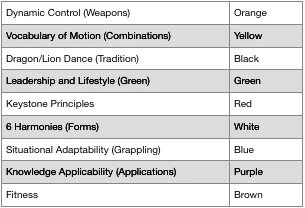
My goal was to retain the 7 coloured stripes moving forward but I think we may be best served by adding purple and brown to our striping rainbow. This will allow us to retain all the current curricular values, separate fitness into its own category, and give the students extra striping goals.
Suggested breakdown is as follows:
If we were to retain only 7 stripes, my intent would be to combine the fitness with Keystone Principles again and Applications with Grappling.
All that being said, I still have to resolve my vision of only testing on the important stuff (keystone principles and 6 harmonies). If we have exhaustive striping requirements, the students' focus will be spread pretty thin and they may not spend enough time on the important stuff.
With that in mind, perhaps reducing the stripes is a more appropriate approach. If we go with: 6 Harmonies, Dynamic Control, Fitness, and Keystone Principles, and Leadership and Lifestyle — that would drastically narrow the students' focus. With Leadership and Lifestyle and Fitness being aspects that are developed outside of class time, that will help keep their focus narrowed to forms, weapons, and keystone principles. I would even consider removing weapons from the mix.
IF we were to remove applications and grappling out of the students' syllabus but leave it in the instructors' syllabus, we would have the ability to keep the students' focus narrowed while keeping the instructors' options open. As long as the instructors are able to connect the dots and see how the applications and grappling help produce the overall product, nothing should get lost in the mix. In this case we will have things that we teach that may cover 100 items but we only test and stripe on 20 of those items.
I need to think on this some more. In the meantime, I would appreciate your input and guidance.
Jeff Brinker
Engaging Students Idea
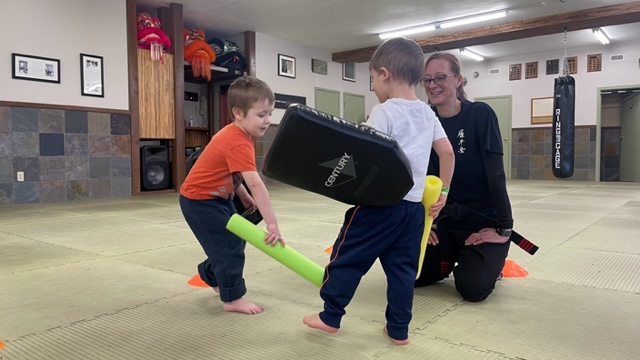
I just wanted to share something that I saw during last Thursday’s Tiny Tiger class. If you recall, the class was doing a basic relay with the focus on the downward foot block and the kids hitting a paddle. The kids were also doing splats on the big shields.
The row that Sifu Brinker had seemed to be having the most fun and I attribute that to the way he was utilizing the paddle. Every time the kids did a splat on the shield, he hit the floor with his paddle making a loud slap. The kids loved it!
I would like to see us all (myself included) engage the students more as Sifu Brinker did. When we are more engaged with the drills, the kids get a lot more out of the lessons.
Thanks!
Tania Vantuil

Instructor Teamwork - Part 1
Please review the video below and make any comments below to get the dialog started. I misspoke in the video concerning having 2 instructors for every 1 student. I had meant to say 2 students per 1 instructor. If we took the Csillag girls out of those numbers we still would have had a ratio of 3 to 1.
Instructor Team Focus
So we're a couple of weeks into the new season with a bunch of new students. I've heard a couple of instructors wonder if we should cut off enrolment as the classes are getting big. These comments have me concerned that some of you may be feeling overwhelmed and if so, you may revert back to your comfort zone and wipe out all the progress we have made in the past few months.
I want everyone focused on engaging the students on a meaningful level and to keep your focus on the students' learning, NOT your teaching. There is a difference.
Please watch the short video below and add your comments and/or questions.