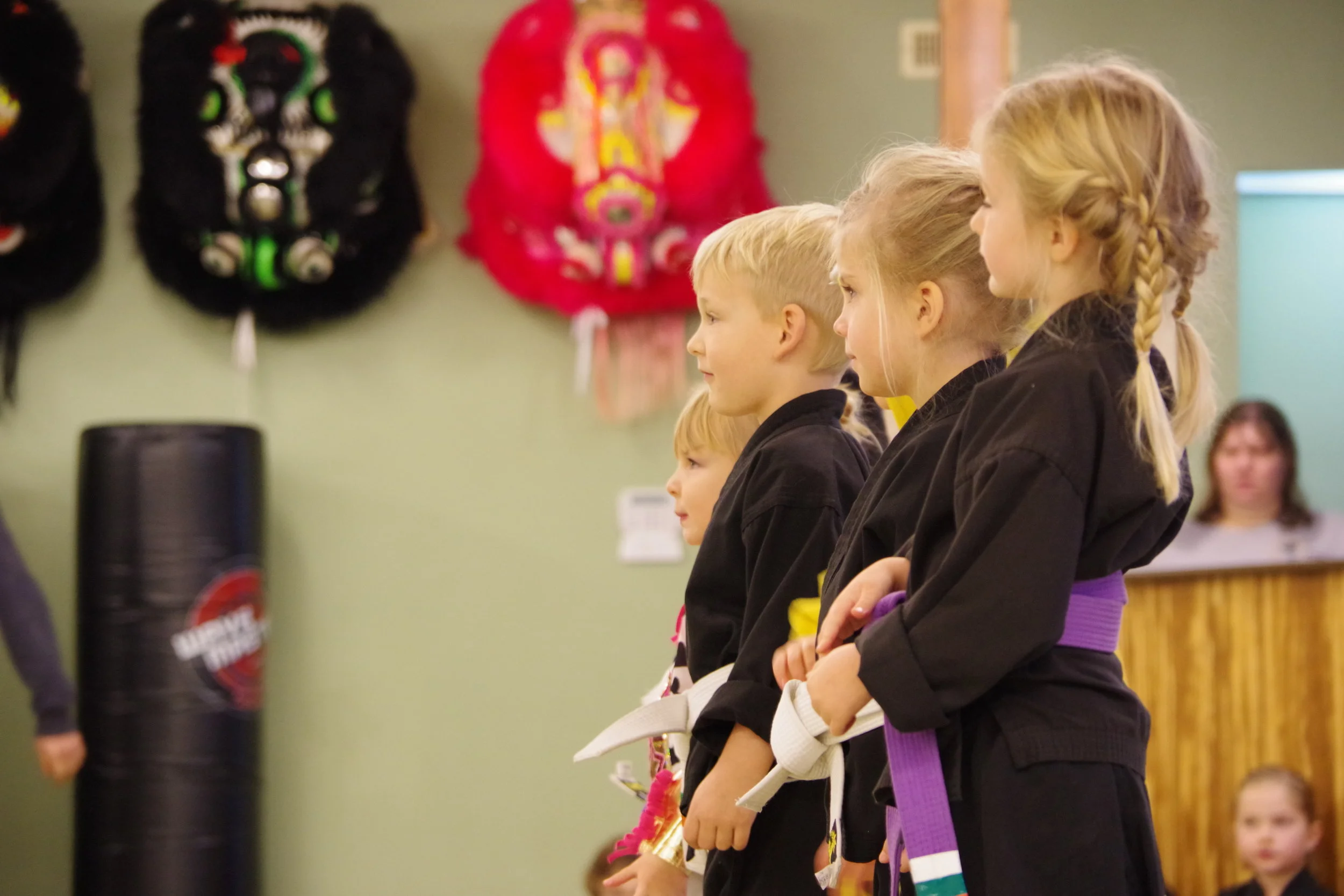
SRKF Instructor’s Review
All instructors please complete this form by Friday, August 8th; please be as open an honest as possible so we can best formulate a way to ensure everyone is feeling fulfilled and supported while building stronger classes for our students.
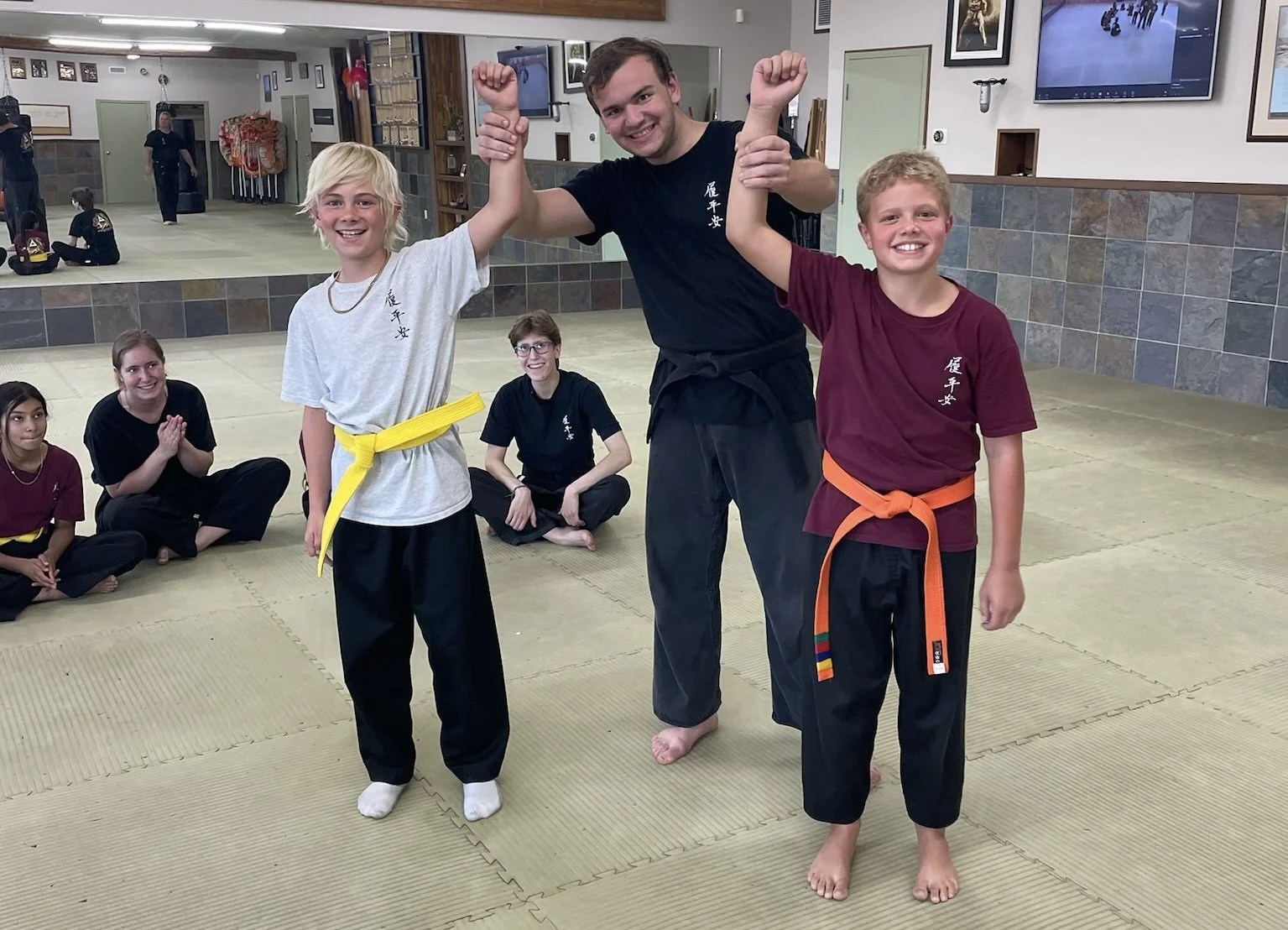
Our Approach While Teaching
Sifu Brinker has a saying, one I find myself referring back to time and again. You can’t force something down a students’ throat. You need to get them to open their mouths first.
What is a sure fire way to cause a student to stop being receptive, to close their mouths? It’s the same for everyone. You and me as well. Put them on the defence. Raise their hackles. Lose their respect. This is the biggest thing we need to avoid doing.
If a student feels they are being judged, you have lost the ability to teach them. Period. As instructors, we need to be diligently mindful of our attitude and demeanour. Having a condescending attitude? Absolute worst way to approach teaching. As instructors you rely on your students to learn, but if they are not, if they are not applying the lessons you have been giving them, THAT IS ON YOU AS THE INSTRUCTOR. Do they have a crap attitude? Yep, on you. Not a phase, not a result their age, not due to the weather or season.
Why do they have a poor attitude? Because they do not have a reason to change it. Why are they not picking up or applying the lesson? Because it has not reached them yet. It could be a matter of learning style, immaturity or maybe they had a bad day. As instructors, you need to have your finger on the pulse of your students and class, to identify the underlying issues and then change your approach accordingly. Not every student learns the same way. Not every student is motivated by the same things. You cannot approach your classes with a one size fits all attitude, because all you will do is alienate and eliminate those students who do not fit into the structure you have decided on.
What does this look like? Taking accountability for your students shortcomings. They have come to us to learn. If they are not learning it is because of our failure to teach them in a way that they can learn from. If they have a bad attitude we need to inspire them, not write them off. We will most likely hit walls in our attempts, but if we are not trying to change the situation or even take an interest in trying to change it, that student is as good as gone. And our school cannot survive without students.
Check your own attitude before pointing a finger at your students. You cannot expect them to know a thing until it has been taught effectively. You cannot expect them to have the ability until you give them a chance to practice and apply it. Talk less, lecture less. Inspire more, teach more. Be invested in your students and their success. Take responsibility for their failures. This is the only way you will have the ability to do anything about it. It’s not about pointing fingers at anyone. It’s about taking accountability, which will give you control and the ability to influence the outcome.

Lockup Procedures

Key holders, please remember that having a key is a privilege, and comes with responsibilities. Instructors, this is part of your responsibility. The Kwoon is meant to be as your home, which means everyone in it is responsible for its condition and cleanliness, especially individuals with keys. Please treat is as you would your own home; if you see a dust bunny, pick it up. If you see damage, mention it to someone who can address it. If the plants are wilting, please water them.
It is critical that this list is taken care of every time we have someone in the Kwoon. Please ensure that everything is completed every night before leaving the Kwoon. If you are the main instructor for the last class of the night, you are the one responsible for ensuring things are taken care of. This does not mean you must be the last person on the mats, however you do need to ensure a key holder is in charge and aware they are responsible before you leave.
Bathrooms
Check for lost items. Place all items in the lost and found.
Ensure washrooms are clean, sinks are not running, toilets are flushed and not running.
Sweep/vacuum lower shelves and corners if dusty (handheld vacuum is available in the office).
Mop Closet
Tap is off.
Hose is placed inside the mop bucket, not left to drip on the floor.
Both the red and main mop buckets are empty, mops are properly stored.
Training Area
Double check that no equipment/possessions are left on the mats or along the pony walls.
TV is OFF.
Office/Entry
Ensure desk is tidy (please do not leave notes, etc)
iPad is under the desktop, wiring is not tangled.
Office lights are off, office door is closed.
All lights are off except the TOP LEFT switch.
Doors
Ensure ALL DOORS are locked; women’s change room door, south door near equipment storage, northeast door, north kids exit door, main door.
A note when locking/unlocking the door- if you have trouble locking the door with a key, go back in and ensure the deadbolt is fully disengaged. When someone only turns it to just after unlocking it tends to cause it to stick when locking with a key.
Between us all, lets keep this place clean, welcoming and safe.

Opportunities, Potential and Mistakes
Let’s be clear- opportunities are not given, they are taken. Someone can create an opportunity for you, but if you do not help yourself and DO something with it, then it’s just a missed opportunity. No matter how badly I may want it for you, I cannot make you take it.
When it comes to teaching, as an instructor on deck I have a world of opportunity, but that does not mean that I will necessarily take advantage of it. If I decide not to engage with a student on a personal level, then I have lost the opportunity to get to know that individual, to gain their trust and therefore have the ability to influence, and the opportunity to grow in my own skills as an instructor. This is just one example.
Some of you are okay with that. I’m okay with that if that is what you want, but know that you are throwing away opportunity and your own potential. In other words, you will not advance to the master level.
If you want more from the classes you attend, then you have to do more with them. Engage on a deeper level. Let me be clear; this has nothing to do with whoever is in charge, this has to do with how attentive you are as both student and teacher, often at the same time. I can be in charge of the black belt class, the “top dog” so to speak, but if I cannot keep my ego in check, if I am more concerned with how others perceive me, then I will miss the chance to learn something when Sihing Csillag asks a question on zoom, or Sihing Burke asks about what something feels like. These are MY opportunities, as much as theirs. They seek my knowledge, I gain wisdom in exploring the answer with them. And don’t get me wrong, I am exploring the answer at the same time as you are hearing it.
And I grow, because I am okay knowing I don’t know it all, that I make mistakes. Mistakes are opportunities too, if you choose to let them be.
The opportunities are endless, the potential is beyond what you can perceive. IF your approach is open, if you are honest in your ability, strengths, weaknesses. If you are able to acknowledge what is the truth about you. If you are able to let go of your ego, your need to be seen in a certain light.
Don’t ask for opportunities. Create them. Take them.
Make mistakes. Make lots of mistakes. Learn from them. If you’re afraid of making a mistake then, ironically enough, that in itself is a mistake.
The only wrong mistake is the one you refuse to learn from.

Curricular Focus and Syllabus Progression
As promised. The direction set by this document is to be the standard moving forward, throughout both the Young Dragon and Teen/Adult classes. Please read through this carefully, refer back to it often, and follow the spirit of each section as outlined. Although little has changed to the syllabus portion, I am hoping the Curriculum described brings clarity to the lessons we are striving to teach, and our methods begin to support the overall goals of the school. The width of a students knowledge is NOT the goal. The depth of their understanding into each technique, and the skill to utilize it are our priorities.
Reach out to me if you have any questions (Sifu Rybak). My number is (780)446-9625. If you do not have absolute clarity on the directions set we need to talk.
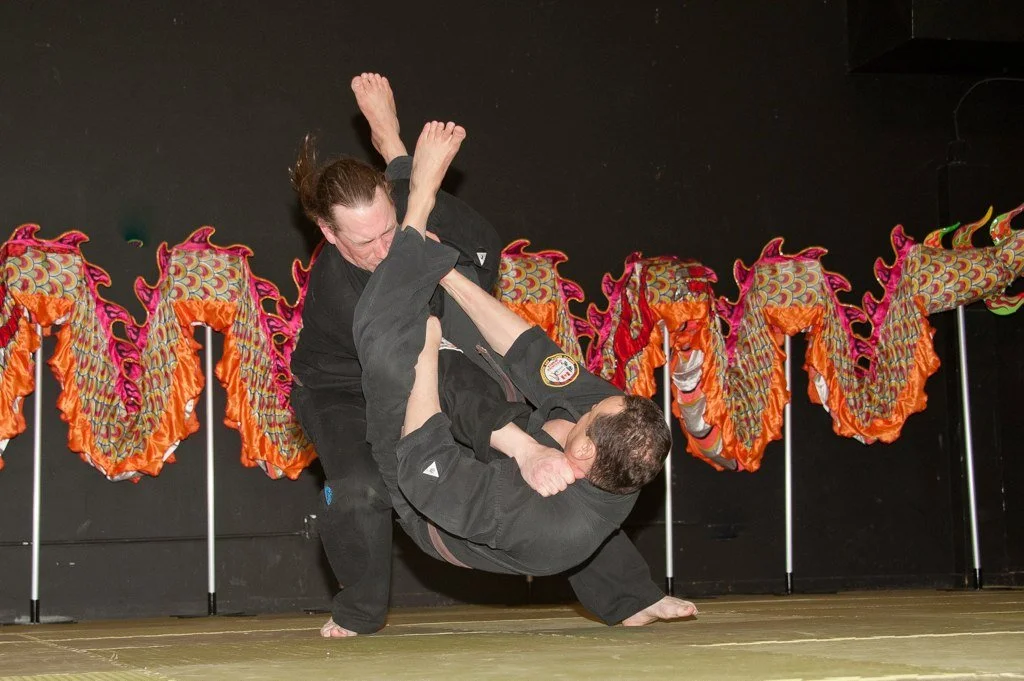
Wuxin- Black Stripe
(As explained by Sifu Jeff Brinker, November 7, 2024)
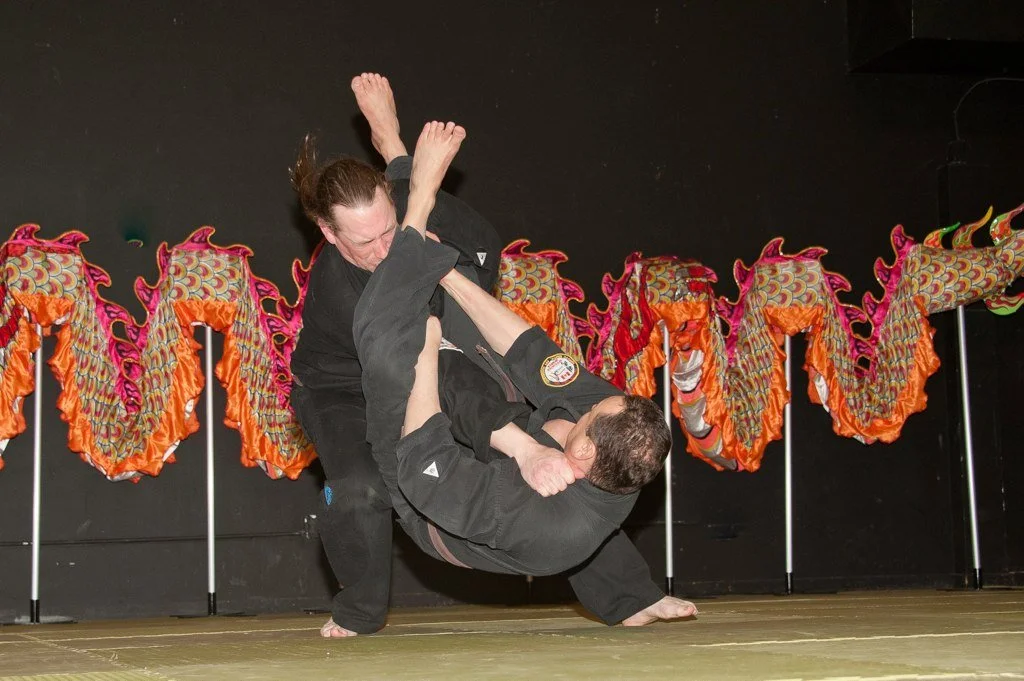
The difference between syllabus and curriculum has been defined for years. Unfortunately, we sometimes still struggle with the differences and keeping them in perspective while we are actively teaching on deck.
Syllabus- the tools we use to teach
Curriculum- what we are actually trying to teach
Intellectually, we understand. Practically, we are struggling.
Using the syllabus as a checklist is an incorrect approach. We do not teach the syllabus; if the students know the tools, that does not yet mean they know the curriculum, the heart of our lessons. It is likened to knowing how to use a hammer; many of us know how to use a hammer, but that does not mean we know how to build a house. Our goal is to build a house, the curriculum, not teach about a hammer, the syllabus.
As it has been instructed by Sifu Brinker, the Black stripe will not be given to a student until all other stripes have been earned.
This is not without its reasoning. The Black stripe, Wuxin, translates to “No Mind”. It is the idea of “Knowledge Applicability”. The ability to properly execute a technique cannot be present if a student has not yet earned, sufficiently to their rank, the Yellow, Red or White stripes. How can they be properly applying their knowledge if they have yet to earn/adequately learn their Vocabulary of Motion, Keystone Principles, Six Harmonies?
Wuxin means No Mind
“What we mean by that is, these techniques are yours. You don’t have to think about them, you don’t have to intellectualize them. You just need to execute them and you know how to execute them.”
How can you execute a technique if you are not able to move in a way that allows you to earn Yellow, Vocabulary of Motion, or Red, Keystone Principles, or White, the Six Harmonies?
In order to have Wuxin, you must perform your Vocabulary of Motion, Keystone Principles and Six Harmonies to your rank.
At a minimum.
Because Wuxin is last, it can serve as a “catch all”; stripes that had been earned earlier need to be kept up to expectations in order to earn the Black stripe. Therefore it is again impossible to earn Black before the others.
“Black stripe means you know how to apply your knowledge. If you know how to apply your knowledge then you have the knowledge.”
Therefore, all other stripes must be earned first.
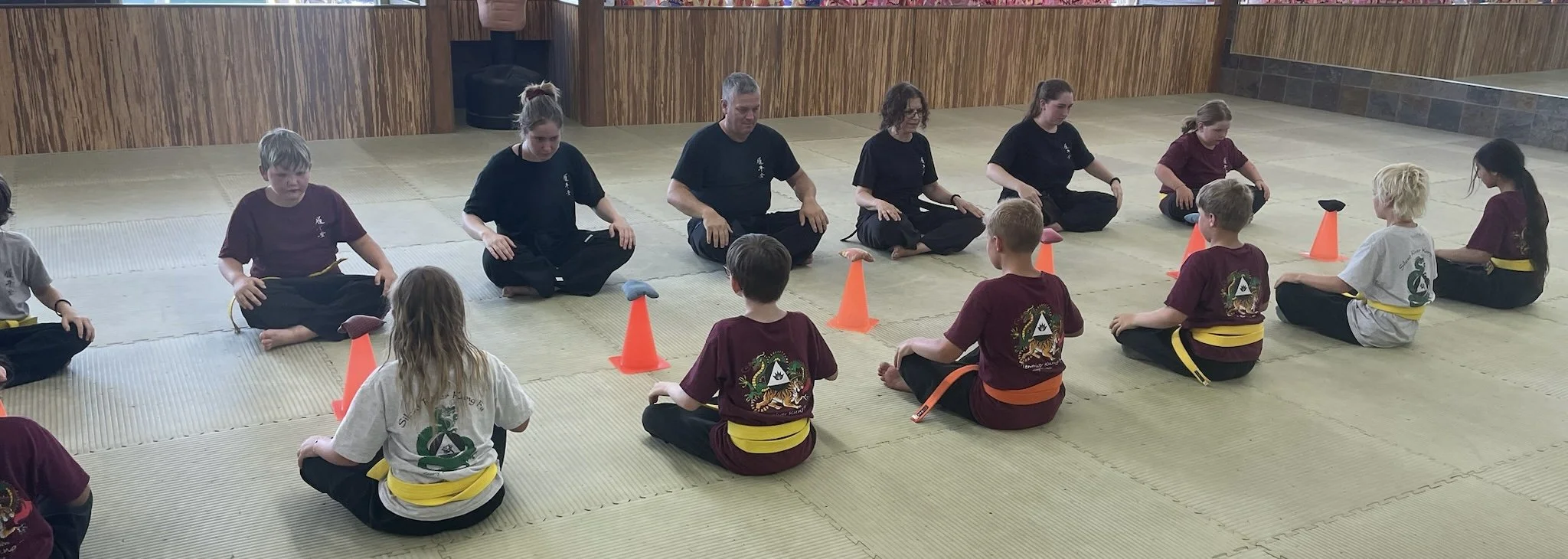
Instructor Investment and Engagement
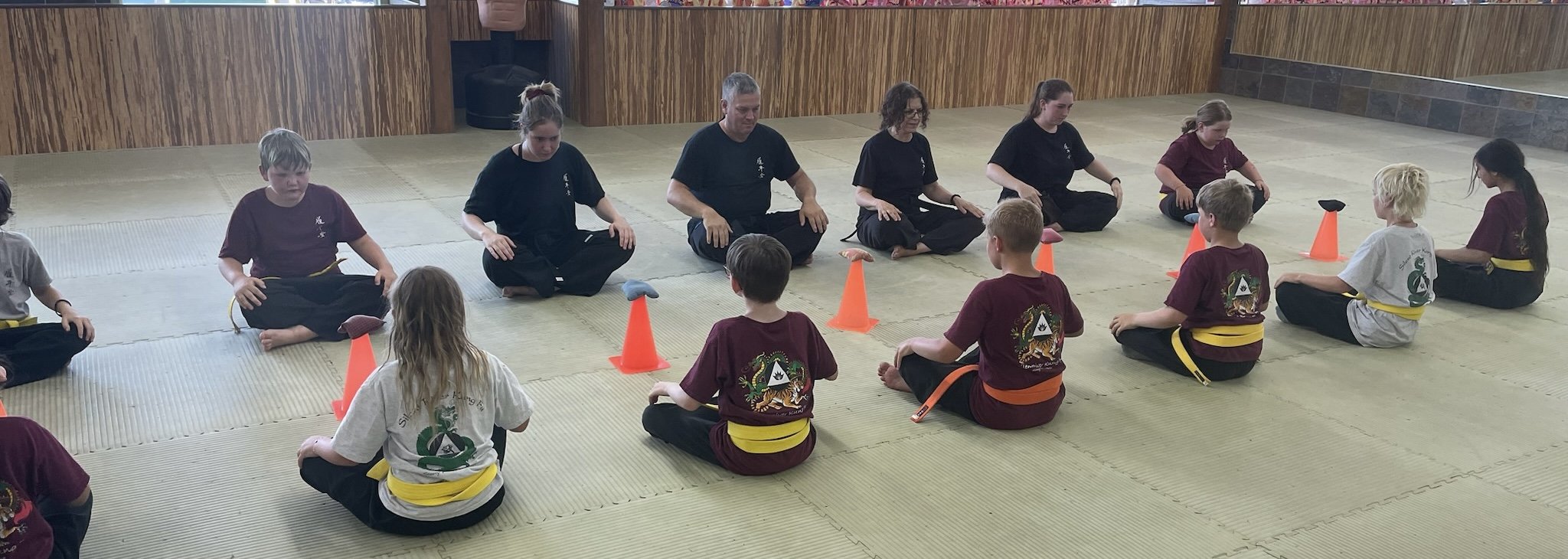
I want you all to think about this; what are we doing? As a kwoon, what are we teaching? What are our goals? What would be our ultimate home run?
Quick and easy answer is “we’re teaching Kung Fu”. This answer is the equivalent of answering “practice” when defining how to improve your Kung Fu. Well, yes. But I hope we all delve deeper when we’re working on our own Kung Fu, looking at details when improving our skill, applying our understanding after a lesson.
When teaching, the absolute ultimate goal in my mind is the overall wellbeing, now and in the future, of the student or child in front of me. I do not control their diet. I do not control their home life. I do not control any of the events they will experience, positive or otherwise. I do not control what they are taught, outside of the one or two hours a week they are within these walls.
The only way we have any influence over their wellbeing is to give them as much chance to mould it for themselves. To provide as many tools as we can to set them up for success and happiness in their lives, from the moment we meet, and hopefully beyond the last time we see each other. Lasting skills and tools, that is what we strive to provide.
Kung Fu is the vessel for this. I have not chosen to dedicate my life to Kung Fu because it taught me to kick through a board. Whoopdee doo. I give my time and energy because I know the skills it gave me and the impact they had. It opened doors for me, provided opportunities. Opportunities that I had created myself, knowingly or otherwise. Created by me due to the skills and structure given to me by my own instructors.
When developing new drills or new program initiatives, when dealing with the rest of the instructor team, when deciding how to manage a distracting child, keep this goal in mind. How are your actions (or inaction!!!) going to contribute to the wellbeing (or detriment) of the individual in front of you? Does it serve you, the program, this overarching purpose, to reprimand or to encourage? Will anyone grow?
We have an extreme amount of influence on the students, specifically the kids, for better or worse. There is no neutral on this, if you are in the room you are an influence. Your inaction tells a story to the student. Unfortunately, inactions is usually interpreted as the instructor is “too busy” or doesn’t care.
If you believed your instructors didn’t care, would you still be here? Would you have achieved your current rank? Gained any of the benefits?
Be the instructor you want. Knowledgeable, skillful, deeply involved and invested in your future. Willing to get into the thick of it with you, not just watching from the sidelines.
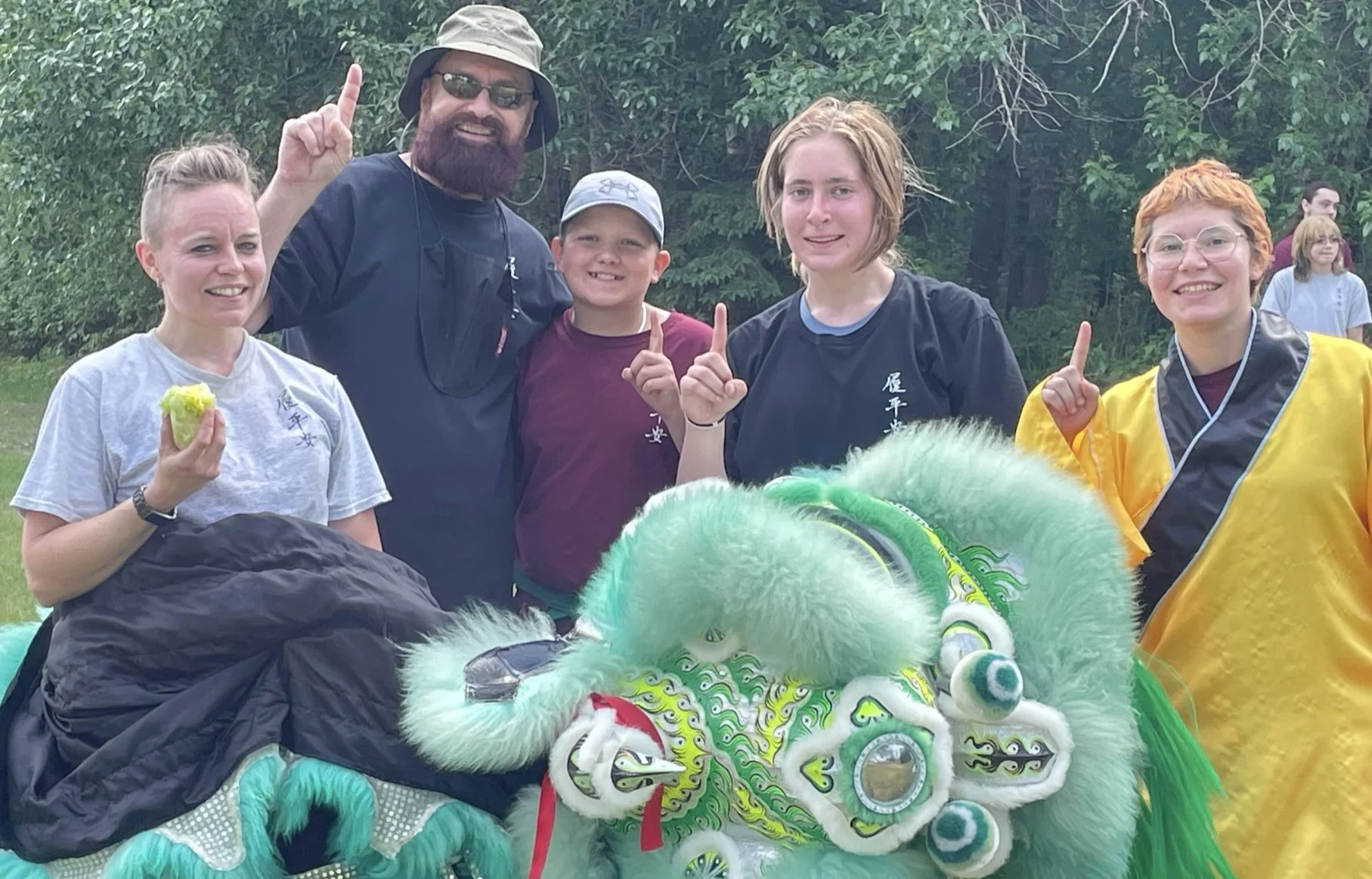
Engagement Over Correction
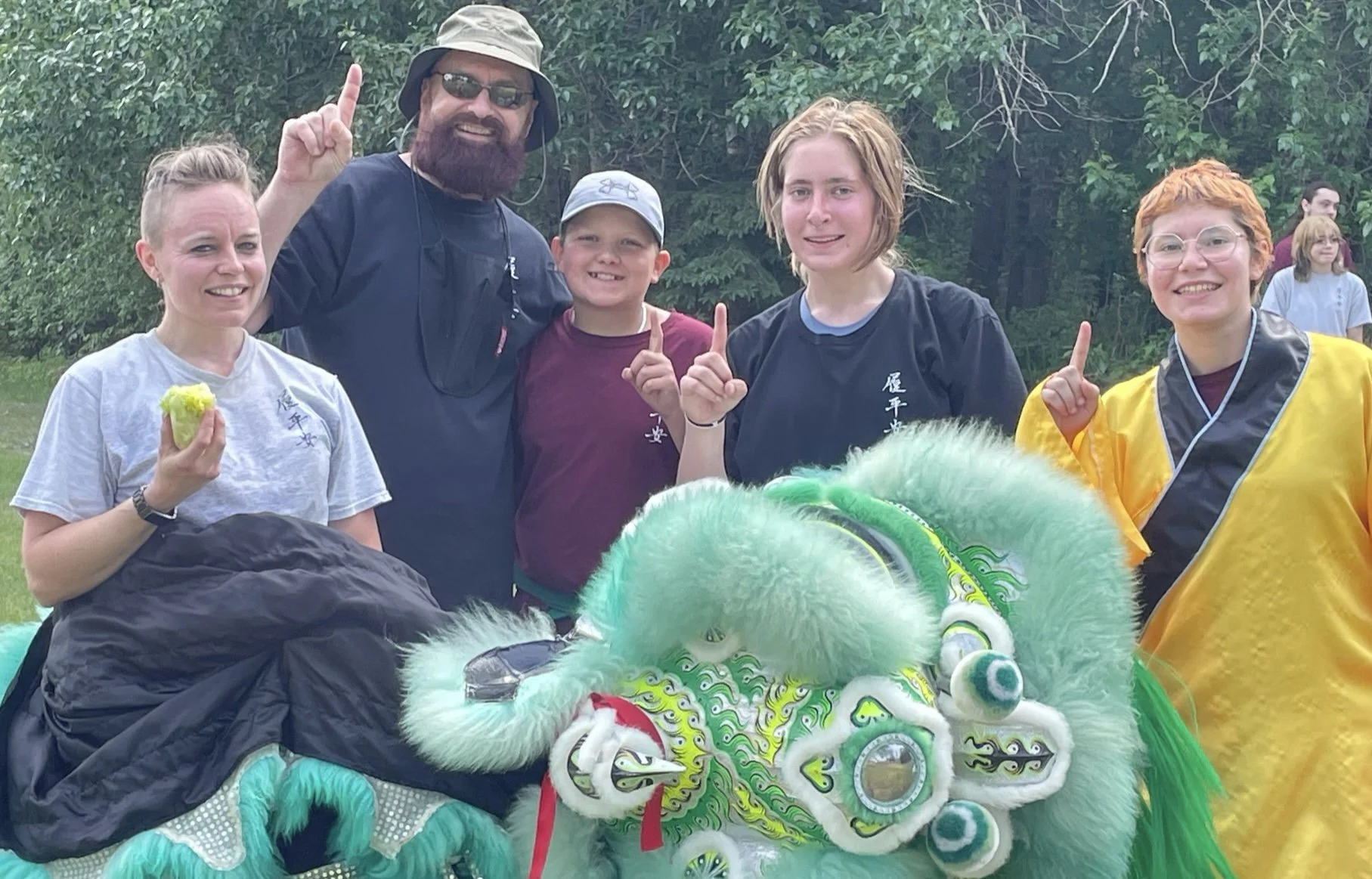
The success of any student does not rely on their natural skill or ability to apply a lesson. These things can be learned and developed over time. The primary factor is their engagement in their classes and in their success in Kung Fu.
As instructors, this has to be our mandate. Engage, don’t correct. Corrections are critical for the progress of their skill, however they are worthless and inefficient if the student is not engaged. Without engagement, they will not hear their instructors and will not feel compelled to apply the knowledge they are given. Corrections are meaningless in this situation.
Our number one job, and the number one thing on our minds each and every time we step on the mats as an instructor, is to connect with each student. Engage them, encourage them, make them feel safe and happy to be there. They need to know that their presence makes us happy, that we want them there. If we can do this for each student, child or adult, they will become receptive to our lessons.
Corrections should be a byproduct of this engagement. They should be given in the spirit of encouragement, we want them to be the best version of themselves they can be, NOT that they can do better. If what we are thinking is that they should be or need to be better, then we will portray the feeling that they are not good enough. That feeling is a potential cancer to anyone.
It doesn’t matter how quickly they progress or what challenges they currently face. Each and every hiccup is potentially a moment that will make them an even greater martial artist, IF we can help them through the slumps. If not, then it will spell the end of their time in our school. Reprimanding a student for a challenge they are facing is a sure way to push them out the door. Don’t kid yourself, each time a student pushes back or rolls their eyes is a challenge they are moving through. It is our job to help them reach the other side and be better for it.
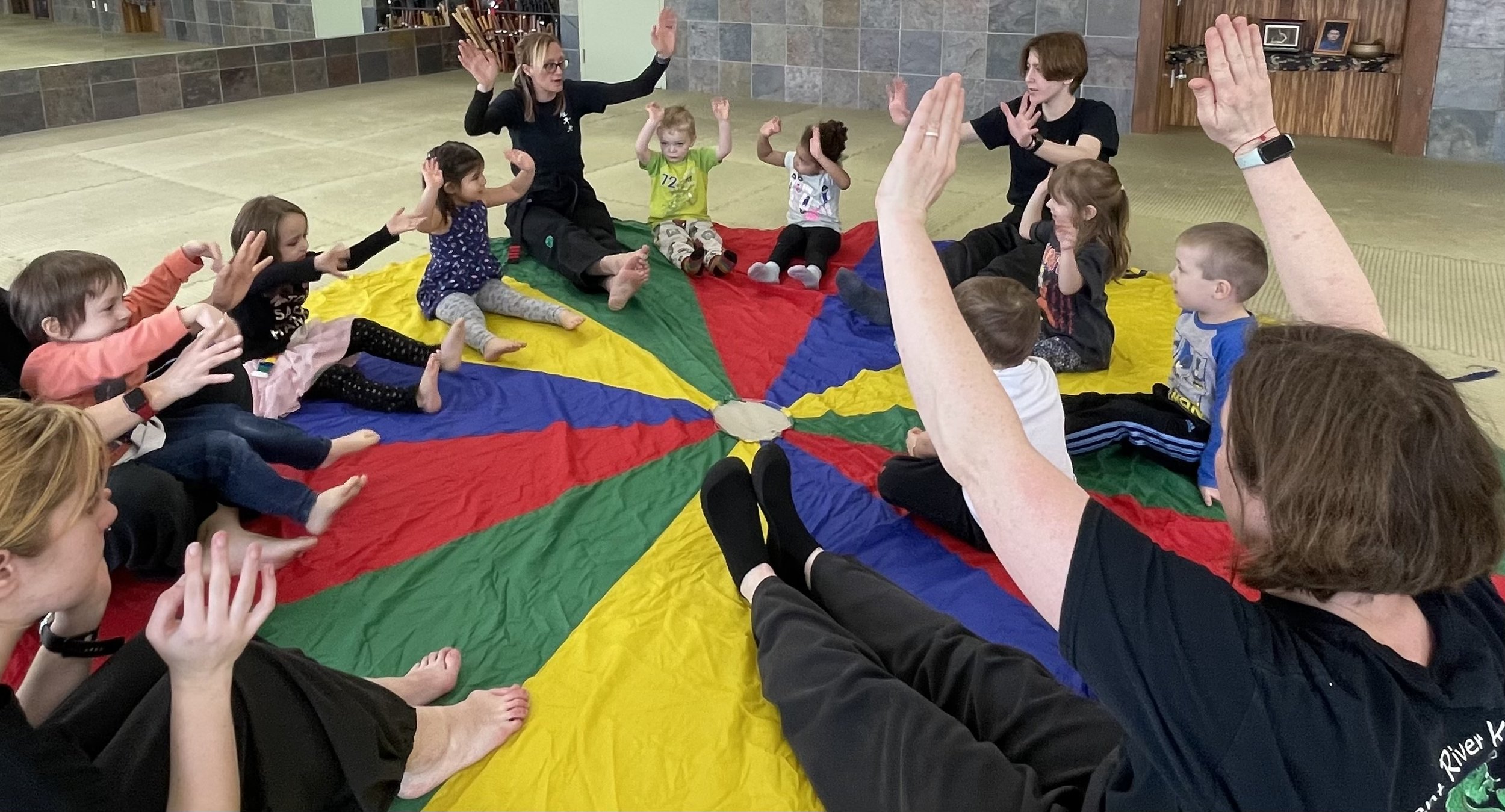
Curricular Rotation
Starting this month, we are planing to start a curricular rotation for both the kids and adult classes. Part of the reason is to decrease the differences in skill and knowledge between the two.
Although our approach for each class needs to be very different, the skills and development at each level should be the same.
In an effort to determine the validity of our current set rotation, we will be documenting what activities and lessons we give in each class. We need to track and control as many variables as possible in order to determine if the rotation will work in its current state, or if we need to rethink the rotation/approach. The spreadsheet that you will be given access to is where we will be tracking both the rotation and what is covered in each class. It would be ideal if we also wrote out what our intent/approach was for each lesson, our successes and the weaknesses we noted and anything that would help us sharpen our skills and leave breadcrumbs for the next instructor.
Although we need to merge the classes, we still need to approach each class and each lesson with the needs of the students foremost in our minds. This means that we all, as leading instructors, need to plan our classes before we hit the mats, and need to make our plan while taking into consideration what the previous instructors have been teaching, what the students need to progress, and what is next in the rotation. We can’t just come unprepared and pick a lesson based on our strengths or comfort zone; in order for this to work as intended we will all need to innovate and look at the classes as a whole instead of as a single night of lessons.
Something to keep in mind, and I’m sure something we will all need to be reminded of periodically, is that we are teaching a curriculum, a set of concepts and ideals. Not a list of exercises. The syllabus, the document that lists all of the kicks, punches, applications, etc., is only a list of tools we have to help teach the curriculum, and we need to remember to approach it as such. The goal in teaching our students the Six Harmonies is NOT to teach them a long list of forms, but rather to use those forms to increase their awareness and ability to apply the Six Harmonies. Each form is useful to help us in different ways- that is what we need to be thinking of when we are teaching them. What is it about this form that further advances our goal of teaching the Six Harmonies? What concepts are hidden within it?
We are always trying to refine our approach. Hopefully, this rotation will help us ensure the success of all of our students while making the transition between programs or levels easier and more streamline. We have lost students in the past due to the culture shock, and although there always has to be differences between the classes, perhaps we can soften the shock for students as they progress in the system.

Meeting Minutes - June 11, 2022
Stop asking so many questions of the kids, specifically “who knows…”. Often when you ask questions and have one kid answer the rest can’t hear and few of the others are engaged. When you ask “who knows” you won’t get an accurate answer anyways (just run them through the form and you’ll know) plus it comes across as you are not prepared.
When teaching forms, don’t do more than a single rep with the whole class (specifically level 1’s). It causes frustration for the kids who don’t know the form and are being left behind. Get them to go through it together to determine what groups you should create.
Don’t explain drills so much. Especially if drills are constantly changing/evolving. You’re losing most of the class. Just get them moving and the rest of the instructors can do the rest. Less yak, more smack.
No class should end on a downer or negative note. Class structure should be high energy, followed by the meat, finishing with high energy.
Gauge your classes mostly based on the back rows, or the kids who are less engaged. Running a class based on the most engaged kids all the time will while leaving behind the others only causes frustration. Too much of a gap, break up the class.
There should be one person leading the class, the rest are teaching (wandering corrections). If you’re running the class, that should be your main job, all other instructors on deck should be continuously engaging with the kids.
Teaching is found in the interactions with the students, not in the drills. You have to connect with the kids. Find talk to them, get to know them, encourage them. Encouragement is a much stronger tool than punishment.

COVID-19 Protocols and Procedures
Sifu Rybak has created our first response to the current COVID-19 pandemic so please familiarize yourself with the protocols below and make sure you ask questions if there is something you do not understand. It is important that we comply 100% with these protocols and keep abreast as the document is updated as the pandemic evolves. Keep in mind that we are behind the eight ball on some of the supplies but as soon as we have them available, they will be on site.
Remember, our risk of contributing to the outbreak is very low as our class numbers are relatively low. Despite the vast majority of us being of low risk of complications from the contracting the virus, it is the more vulnerable people in our community and homes that we should be concerned about. We do not want to increase their risk of exposure so it is important that we follow these Health Canada guidelines.
I need every one of you to read and acknowledge that you have read the protocols by commenting below.
OBJECTIVE
The protection our our students, our families and ourselves is the first priority. Consistent and routine sanitization of common surfaces and hands. Removal of soiled materials (rags, hand towels, garbage) on a daily basis.
INVENTORY
Items are to be kept in stock at all times.
Clean Rags
Clean Hand Towels
Bleach/Lysol Lysol Wipes/Spray Disinfectant
Windex
Toilet Paper
Kleenex
Hand Sanitizer
Hand Soap
Garbage Bags
PROCEDURES
Personal
Wash/sanitize hands after each class.
Immediately wash and sanitize hands after in obvious contact with bodily fluids (snot, blood, saliva).
Keep a spare uniform on hand in case of obvious contamination (eg. snotty kids).
Arrive to classes in street clothes and change into uniforms on site.
Change back into street clothes before leaving the building.
Launder worn uniforms after each shift.
Training Area
Mats will be disinfected (mopped) at the end of each night.
Mats will be vacuumed and power scrubbed once a week.
All water bottles are to be kept at the rear of the training area (not along the sides).
This area of the mats will be disinfected with Lysol/spray disinfectant after every class.
Common Surfaces
All common surfaces to be sanitized prior to start of classes, at the end of each day and, when possible, between classes. These include:
All door handles
Front desk
Pony wall
Parent benches
Entrance window frame
Boot racks
Washrooms
All instructors must wash their hands after using the washroom.
Single use hand towels will be provided and are to be placed in the provided baskets for laundering.
Spare toilet paper to be kept in the storage room to prevent theft.
Showers are closed to all instructors and students.
Post-Classes
Sanitization of all sinks, counters, toilets and other common surfaces (as listed above) will occur before instructors leave for the day.
Empty all garbages.
Laundering
All dirtied rags and hand towels are to be laundered using bleach and hot water.
Kwoon materials are not to be washed with personal items.
Meeting Minutes - February 18, 2020
New, unified syllabus (same for both kids and adults)
7 stripes, 7 core concepts
Yellow- Vocabulary of Motion (how you move, flow)
White- 6 Harmonies (forms) Red- Keystone Principles (have to become progressively better)
Green- Lifestyle & Leadership (if your lifestyle doesn’t support your Kung Fu, you won’t pass your grading, core values, leadership)
Blue- Traditional Tenets (2000 yrs old, still around for a reason, still relevant)
Orange- Dynamic Control (even with changing situation, exemplified with ability to handle a weapon)
Black- Wuxin (no mind, how you should be able to apply your Kung Fu in real time; no syllabus, last to be earned)
If asked, the answer needs to be specific to each student. What they do7 to earn it or what they need to work on. Specific with weapon forms or hand forms. As specific or vague as needed with keystone principles, vocabulary of motion, etc.
The CURRICULUM has never changed. The syllabus has been changed, yes, but adjusted in such a way to make better black belts, to address the weaknesses that have been noted, make the road better for upcoming generations.
Train to learn the curriculum. Teach to teach the curriculum. The syllabus is just a list of tools. Teach what the class needs, do not just teach to serve a piece of paper.
Keep each other on the right path. If you see one of us teaching just to stripe or knock it off a list, bring it up. If students are asking “what do I need for x stripe?”, this is a warning that they are working to be striped, not to learn Kung Fu.
Need to always apply a high level of control and a high level of discipline in all the classes (eg. 3 points of contact on the stick). Free sparing needs to be taught and not just done. Control needs to be taught and maintained.
This is a learning curve. Ask someone who understands if you do not. Do not just regurgitate answers you’ve heard given; understand why that answer was given to that student. Develop your own vocabulary.
Ego based teaching is the problem (this is not equal to arrogance). For ourselves vs. for the student. Teaching what we know instead of teaching what the student needs. Going into detail and taking away their chance to get the reps in. Even if you have something great to say, consider how it will be received or if it will help.
We need to have each other backs. We have some problem students; we need to be watching for disrespectful attitudes. It can’t be up to the individual being disrespected to enforce.
We need to maintain control and recognize when we’re losing control. In this case, we need a reset.
Make sure you are visible to all students. Be mindful of the guys in the back in the center.
Meeting Minutes - November 23, 2019
Trying to win the war not the battle- need to correct at the right time. We do have a problem with discipline but how we crack down is just as important. We tend to jump in when the kids are participating, maybe just a little enthusiastically.
Tiny Tigers on November 14, 2019-
Separate Lindens and Hoffmans & Lars’s in lines.
Keep in mind parents- don’t let the problem kids be front and center in front of the parents.
Make sure we don’t get distracted by the instructions- make sure we notice the kids beside us and not just where we’re looking.
Be aware of the other instructors- don’t interfere if another instructor is working with a student (successfully). Be aware that we’re blocking the students view and being a distraction if we’re just wandering or standing in the rows.
Need to engage. Just holding a target and then walking away is not engaging.
Need to understand and follow the spirit of instructions, not the letter. You need an understanding so make sure you do, ask if you don’t- you can make things worse if you don’t understand.
Less talk- no need to have a conversation with the kids. If you need to explain then it’s a lesson for the group or should be saved for after class, etc.
To deal with Booth and others like him- need to be decisive and act accordingly. Stop him, don’t chase him. Decisive and compassionate- this is a safety concern.
Knudsen- needs a sense of purpose to the sound focus. He’ll be able to handle the repetitive, loud noises if he has a purpose behind it.
Example- correcting kids when they scream too long, to high, etc. We encourage them to scream then complain when they do it wrong- they need to understand the why (if you’re busy screaming and you’re punched in the gut it won’t go well for you).
Need to be mindful about consistency. If we’re at the front we are all the mirror image. When we count, we count first strike second. Consistent with terminology (switch, sound focus vs. just switch). Everyone from now on- command, sound focus. Command- gets them thinking. Sound focus- gets them reacting.
Lao Gar- kids cannot repeat. However the standard is just shadowing therefore we’re okay. We need to keep this in mind when we’re teaching and helping. Usually teach sequence then technique- when teaching to shadow, need to teach technique before sequence (they don’t need the sequence).
There is no difference between the syllabus for the kids and adults, however there is a difference in requirements. The syllabus is a living document so refinements will be happening as time passes.
Make mistakes, explain if you disagree, tell us your logic, what you’re seeing and why you’re doing.
Meeting Minutes - January 8, 2019
Paige Hall- December 2017
Two stripes in the system, four on her belt. Parents are extremely engaged. Paige’s lack of effort and engagement falls onto us. She is motivated, likes more than she dislikes. According to her mom Paige becomes more accountable when she knows her mom is watching. Experiences from instructors differ. Regardless, we do not have the results. Keep an eye on her; we need to know if we have what it takes to motivate her.
Apparently she does not know what she needs to do to get striped or why she isn’t getting striped (as per her mom).
Passports worked great for her- little goals and direction.
2. We need to reverse engineer why the stripes are off & double check when we enter information. Check in workouts & skills on the overview page (shows only for current belt). Striping to be left to Khona for the foreseeable future.
3. Passports on line may become a possibility (through zen). Sifu Brinker wants any suggestions we have regarding this.
4. Progressive syllabus requirements. Any progress? Don’t hesitate to speak up if you are not interested in participating. High priority.
5. Need to stress- need more doers (healthy guys). Many of us cannot demonstrate some of this stuff but students still need to see it and have that motivation. If you’re good at something, show it off. If you’re not, don’t.
6. Banquet- as of next year our venue is changing. Holy Trinity Church already booked this year. 1/3 the price, includes dishes & sound system. Problem is Saturday Mass at 5-6pm (right during lion dance). Possibility of moving starting time half an hour. If you have any concerns please speak up. Booked for January 25, 2020.
7. Need to line up 6 in a row in BBD. Desbiens was not only in the change room but was being blocked by us while we were helping the new guys.
8. Aubriella Balan-Waege- we need to talk to her parents (need void cheque).
9. Depending on Claire the ABD will be getting shut down. Ryder (maybe), Carter Hanson & Blakely Whitehouse-Strong will be moving out after the next grading.
10. Teaching shoulder rolls- kid to go over shoulder opposite you, grab their head & pull it to the opposite shoulder, throw their legs over. Kids don’t have a chance not to do it. Demo’d by Sifu Brinker.
11. New TT. Idol is Bruce Lee. Make it work.
Meeting Minutes - December 4, 2018
Banquet- looking for ideas to better promote the Pandamonium & increase parent engagement
Pandamonium- considering making it part of farmers days. The fundraising should be occurring throughout the year as part of the intelligent curriculum.
Water bottles, AofK, etc- Why? NOT because we're tree hugging environmentalists. Everyone understands that plastic is bad, but not everyone knows recycling is not universal and nota solution. Change starts with you; what can you do? Responsibility & empowerment. These are the best tools at our disposal to teach empathy and compassion. Students want to reuse a disposable water bottle? No- poor leadership. No one else knows its full of tap water & all it does is send the wrong message & undermine our ability to teach the other kids.
Think about the lion dance, altar, items on the walls; everything has a purpose.
Don't expect a child to transfer information, notices or concepts to their parents. Talk to the parents directly.
Assume children that are acting out, not listening, etc. have some sort of mental limitation. Hands off kids you don't know unless there is a safety issue; physical contact can become a trigger. Students that leave for a duration eg. Cohen Johnson need to be eased back into where they were.
Avoidance as a strategy with anxiety is common. If you allow a student to avoid the situation you are reaffirming avoidance as a strategy and you are doing the individual a disservice.
Animal badges- must be on every uniform. Yitzik to send Khona the spreadsheet from the Tiger Challenge so an animal team winner can be determined.
Please feel free to fill in the gaps.
Meeting Minutes - May 1, 2018
Possible new student with autism (8yrs) signing up. Was in MMA classes in BC, managed to integrate into the main class then the family moved. Will have to gauge whether TT or BBD is most suitable- one-on-one with an instructor for the first few classes best bet. Triggers- loud noises and crowds.
Grading Saturdat- Robbie Percy & Kyle Rempel. The Intent to Promote letters need to be handled properly; had an incident where we could not find Robbie's letter, it had been folded and left on the filing cabinet without anyone's knowledge. Needs to be handed directly to main instructor, signed with grading date and scanned onto their file before they are placed in the Intent to Promote file (in the top wall file inside the door of the office.).
Kids talking during class & instruction- needs to handled, the instructors need to be setting the example.
Too much noise from the penalty boxes, the front desk and from instructors meeting on deck. There should be zero. We can't reign in the parents in the instructors are setting a bad example.
Talking about the classes during the classes is too late- this is why we need meetings before the class. If things go off course, wing it and adapt.
There will be some exceptions (learning zen) however conversations and sign ups are to be moved into the office.
Number 1 reason people quit- The perceived indifference of the instructors.
Instructors are letting their guards down during the IBD, having conversations or doing their own thing. Keep busy, keep engaged with the class and don't stand still.
Deal with sign-ups & parent conversations in the office, therefore no conversations on deck or at the desk.
Deal with Chiasson, Kover & Tomie- expectations should be higher for established families as they set the example. Kids and parents both need to be reigned in, kids can't be coming and going as they please.
Try to handle purchases and payments between classes as much as possible Class notes & skills entries done at the front desk.
Front desk is becoming a disaster- papers and belts everywhere, paperwork being misplaced. Needs to be cleaned up, things handled or put away as they come up. The printer will be moved into the office & the office will be changing.
Need to integrate concept of boundaries more into the classes. Kids are pulling on each other, etc. Teach them how to be aware of body language & use the word "boundary".
Respect must be in classes. Kids need to learn these skills, not just be told to show respect. They need a reason, taught reasons and shown how instead of blindly doing. We need to set the example, we need to be showing them how and we need to be doing instead of saying. We need to be teaching with words other than "respect".
Bowing should be a personal message, not mindless. If it's a bark out during a drill it is not personal. If the class isn't stopped it is not personal. The students need to be thinking of the when and why instead of mindlessly bowing or bowing "just in case"; this isn't showing respect and isn't making them mindful.
Need to get the kids on board with the acts of kindness and fundraising before we focus on the Pandamonium. We can launch Color Your Kwoon in a week or so once the excitement recedes, and use the kids demos in the same way.
Meeting Minutes - February 27, 2018
Adult instructors @ the meetings- if we do follow through and change the meetings to a general instructor meeting we'll need to stop discussing particular kids and anecdotal information unless it pertains to an issue across the board. These types of things should be discussed online anyways as waiting until meetings is too long to address them appropriately and efficiently.
We should be reading these notes after they're posted and referring back to them over and over again. A lot of repetition in the meetings- some of which could be stemmed if we referred back, refocused and refreshed ourselves to the issues.
Make your own notes during these meetings so that everything is in your own language and you're not relying on another's interpretation.
If you don't understand or agree with a direction thats being set bring it up to Sifu Brinker, challenge him. We need to be on the same page and if not we need to be discussing these things.
Chronic tartiness- we need time for pre class meetings before the doors open. Need to be here, changed and on the deck at least 10 minutes before the doors open.
We need to have a set, systemized approach before June (when you loose me). The parents aren't seeing the value of the extracurricular stuff (passports, projects, pandemonium) and if it continues these projects are doomed. This needs to be addressed in the next 8 weeks.
Sifu Brinker needs better access to the instructors.
All instructors need to understand the direction the classes are being taken and the vision for the classes as it stands. This is different than agreeing- first understand and move forward with it, then challenge if you see fit.
Think about the level of commitment you can give to this approach, i.e. being here early enough for a 10 minute meeting prior. Let Sifu Brinker know if this is going to be an issue. If so, we need to find an alternative that will accomplish the same things (more meetings, most likely).
July- I'll be gone (Khona) along with Dan (gone for 2 weeks). The remaining instructors are going to have to take on a major role. Having a system in place will be vital. Note that the Csillag's will be gone on several days during the summer, including July.
The curtain on the store room MUST be closed at all times. Zero tolerance. The image of this school has been built up over decades and something like leaving the curtain open wipes out all that work. It has been shown that people associate clutter with lack of safety.
As noted by me (Khona) even when we're engaged with a child we need to stay aware of the class in general. If you're working with one kid and another is lighting a fuse elsewhere and no-one notices it creates huge problems.
All conversations at the front desk (incl. between Lisa & myself) need to be quieter. Conversations with parents should be moved into the office. Eventually signups should be moved into the office as well. No conversations on the deck during classes (this doesn't include instructions, just two way conversations that require conversing back and forth, back and forth). If a conversation is needed, pull the instructor into the office.
Meeting Minutes - January 30, 2018
Grading Saturday- Willoughby & Chiasson
Willoughby- tartiness is getting better but we need to have a zero tolerance approach; talk to his mom if it continues.
Last for a student is defined by arrival after we bow in. We need to have a conversation with the kid first followed by a conversation with the parents. This should become part of a stripe (probably green); if a kid is late they loose the stripe. ***Tartiness is part of the lessons but not a factor in the stripe until it becomes an issue*** This can't be binary; if it doesn't serve a purpose then theres no reason to do it.
Involve Sifu Brinker if it becomes an issue.
Bullying- is a perceived imbalance of power. Chronic conflict isn't necessarily bullying unless there is a power imbalance. We should be teaching these concepts every day in classes as life lessons and organically, never sitting down and lecturing. The green stripe needs to reflect this (the life lessons & the curriculum, not memorization of facts & presentation of them).
Banquet- Sifu Brinker wants to have a kids demo using the kids that will be there and determined by their strengths so that rehearsal is unnecessary. Need to look at the list to determine what students we have and where we can go from there. Need to be done by this weekend.
Need to clarify with students that people without tickets won't get in like in previous years. Also clarify there will be assigned seating & schedule; doors @ 5, program @ 5:30, dinner to follow
Mightybell- keep note and bring up any notifications you don't get. Having some issues with notifications in certain groups, want to make sure the system is working. If you post something and receive no comments or acknowledgement reach out to find out why.
Meeting Minutes - January 9, 2018
Coen Johnson- refusing to participate in classes on occasion. He has gotten better but has regressed since taking time off over Christmas. Instructors need to be consistent when dealing with him and he gets no warnings anymore; he knows the rules.
Jessica Johnson- showing defiance towards instructors (Lisa)
Mediocrity seeping into the school; Fodor (intermediate adults) is close to being thrown out because of his attitude and disregard for fellow student and instructors. If he's been allowed to act this way in his class it goes to say there is mediocrity in other classes as well.
Need to become binary on discipline.
**No one will make the class wait. If they do they're done for the day.**
Look at these instances as missed opportunities; we have a chance for a great life lesson but if we let the kids get away with these things not only are we missing the chance we are also harming them and the rest of the class.
Riley Coombs & Jacob Johnston grading. Hayden Chiasson being held back by parents of the second month. We need to talk to Katy to ensure he is not going to fall into a slump.
Remind the parents that they have the ability to override the teachers if they feel the need to when we talk to them about grading and the intent to promote.
Leigh Willoughby- perpetually late; need to take action on this and talk to his parents. Sifu Brinker has talked to his dad (note in front desk) so we need to wait and see if anything changes.
Instructors Pay and Subs
Only paid for classes we attend. No more coverage UNLESS it's proper coverage approved by Sifu Brinker and the heads of the programs (Lisa, Tania or Khona depending on program). We will in the future have an approval process. At the same time we need to be encouraging and training other individuals so that they can become approved. One if us needs to be specifically assigned to the trainees
*We need to pay our subs. We are responsible for this, it won't be deducted from our pay.
**We cannot be late! It causes damage to the school. If you're walking in when the doors are open and students are arriving you are late. We'll be deducted for arriving late.
Meeting Minutes - November 28, 2017
Hayden Chiasson- will not be grading this Saturday due to some issues at school.
Sam Percy- has tactile issues; need to start poking him a bit (not literally) to try to get him used to touch and ready for more contact
Sam Tomie- we need to be consistent in our approach with her- when she starts getting anxious we need to get her to calm down and focus without resorting to injury. Let her get a drink and take a minute away from the class to collect herself. Nichole is on board with this approach and will be working on coping mechanisms at home with her.
Capacity of TT- 32-38, but is dependent on the student we have and what we can handle at the time. Ratio is 7:1, but if we have a few kids who need a bit more attention then we'll decrease our enrollment
Bows- need to sort it out. If they need to be amped up then don't let the bows disrupt that. Use when .appropriate. When it is used the students need to be mindful. We also need to have very clear, loud instruction. Don't set the kids up for failure.
Fixing the bows will start with us- we need to be 100% mindful.
We have turned the corner and reached equilibrium. Well done guys.
TT- wean off relays & ossicle sources. They can be used but should be exception and not the norm.
Don't beat a good idea to death.
Don't leave everything to one individual; think and fill in the gaps.
Kids demos- move to Pandamonium. Possibly do a demo at the banquet with just the top students.
Need to start thinking about the kids awards. I'll post separately for that.